Wrist Pain Regenerative Treatment: The Carpal Tunnel vs. TFCC vs. Arthritis Protocol Selection Matrix
Wrist Pain Regenerative Treatment: The Carpal Tunnel vs. TFCC vs. Arthritis Protocol Selection Matrix
Wrist pain affects millions of individuals annually, yet regenerative medicine treatments are far from one-size-fits-all solutions. The critical challenge facing patients today is receiving generic treatment recommendations without understanding why their specific diagnosis demands a distinct regenerative protocol.
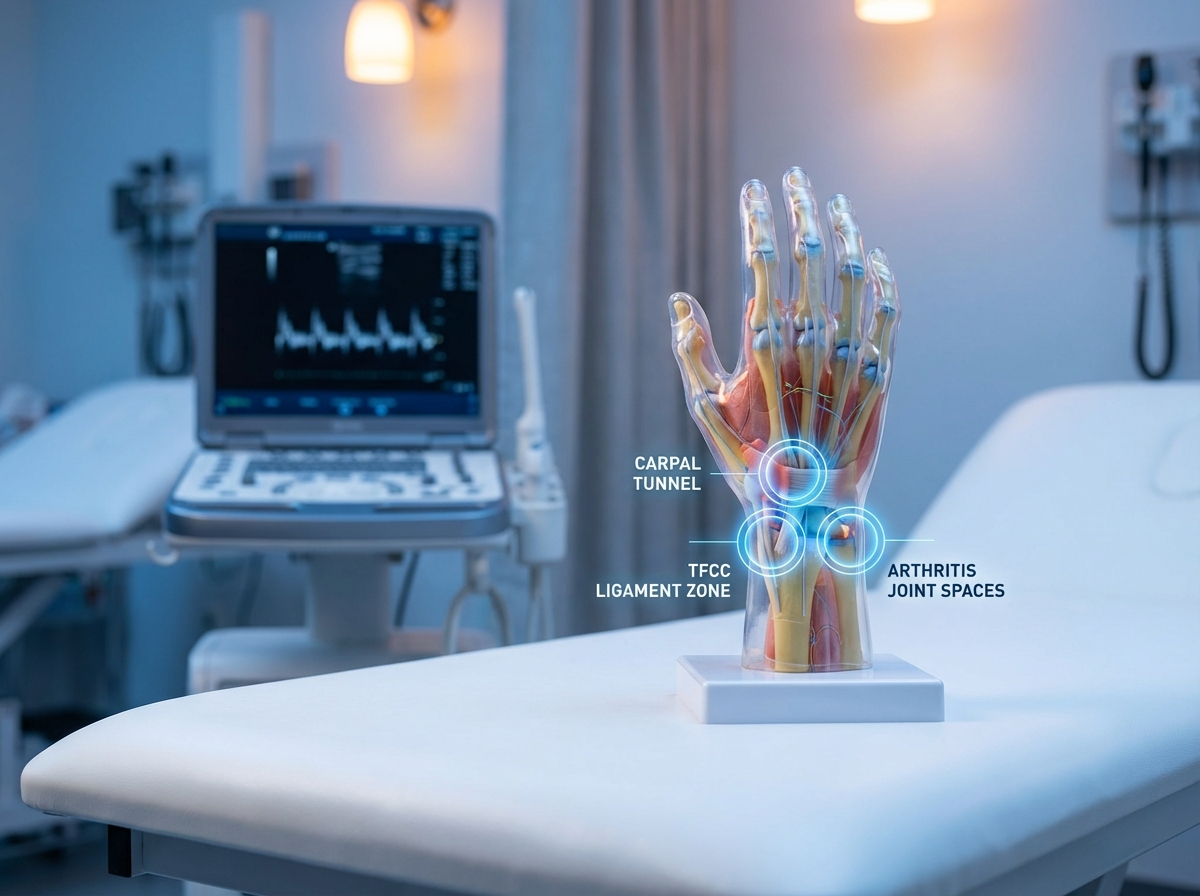
Three primary wrist conditions—carpal tunnel syndrome, triangular fibrocartilage complex (TFCC) tears, and arthritis—each require fundamentally different regenerative treatment pathways. This diagnostic-driven framework maps these conditions to their optimal treatment protocols, helping patients and practitioners make informed decisions. When regenerative treatments are properly matched to diagnoses, clinical evidence demonstrates many patients report long-term pain relief and improved function.
Understanding the Diagnostic-Treatment Connection in Wrist Pain Regenerative Medicine
The selection of regenerative treatment depends on three critical factors: tissue type, injury mechanism, and disease stage. Understanding these distinctions is essential for achieving optimal outcomes.
Carpal tunnel syndrome involves nerve compression, where the median nerve becomes compressed within the carpal tunnel. TFCC tears represent structural damage to the fibrocartilage complex on the ulnar side of the wrist. Wrist arthritis involves progressive cartilage degeneration affecting the joint surfaces.
Each tissue type responds differently to regenerative modalities. Nerve tissue benefits from anti-inflammatory and nerve-healing properties. Fibrocartilage requires cellular building blocks for tissue reconstruction. Degenerating cartilage needs both inflammation control and regenerative intervention.
Advanced imaging through ultrasound and MRI plays a dual role in this process—confirming diagnosis and guiding treatment delivery. Research consistently shows that early intervention in disease progression yields superior outcomes across all three conditions, making accurate diagnosis and timely treatment essential.
The Carpal Tunnel Syndrome Protocol: PRP-Based Approaches
Carpal tunnel syndrome occurs when the median nerve becomes compressed within the carpal tunnel, causing numbness, tingling, and weakness in the hand. This condition primarily requires anti-inflammatory intervention and nerve healing support, making Platelet-Rich Plasma (PRP) the foundational treatment modality.
Randomized controlled trials have demonstrated six-month efficacy of PRP for carpal tunnel syndrome, establishing it as a viable non-surgical option. When combined with Extracorporeal Shock Wave Therapy (ESWT), studies show significant improvements in chronic hand and wrist conditions.
The typical symptom reduction timeline of 4-6 weeks aligns with nerve regeneration patterns. Patients generally receive 1-2 PRP sessions with ultrasound guidance to ensure precise delivery to the carpal tunnel area. Emerging exosome therapy pilot data from 2023 has shown nerve conduction improvement by 3 months, suggesting additional treatment options may become available.
When PRP Alone Is Sufficient
PRP monotherapy works best for patients with early-stage carpal tunnel presenting primarily with inflammatory symptoms. The mechanism involves concentrated platelets releasing growth factors that reduce inflammation while promoting nerve healing.
Clinical studies demonstrate PRP injections can provide significant symptom relief for properly selected candidates. Systematic review evidence also supports 5% dextrose (D5W) as an alternative or adjunct treatment option for carpal tunnel syndrome symptom relief.
Combination Therapy for Advanced Carpal Tunnel
When carpal tunnel syndrome progresses beyond mild stages, combination approaches become necessary. PRP combined with ESWT enhances treatment effectiveness through mechanical stimulation and increased blood flow to the affected area.
The combination protocol typically involves an initial PRP injection followed by ESWT sessions over 6-12 weeks. This approach has demonstrated significant functional improvements in chronic conditions, making it particularly valuable for patients who have not responded to conservative treatments.
The TFCC Tear Protocol: Stem Cell-Dominant Strategy
The triangular fibrocartilage complex is a cartilage structure on the ulnar side of the wrist that provides stability and cushioning. TFCC tears represent structural damage requiring actual tissue regeneration—not merely inflammation control.
Fibrocartilage has inherently poor natural healing capacity due to its limited blood supply. This biological reality makes stem cell therapy superior to PRP for TFCC tears. Early clinical studies demonstrate that stem cell injections can reduce pain, improve function, and regenerate damaged cartilage, often eliminating the need for surgical intervention.
The mechanism involves mesenchymal stem cells differentiating into fibrocartilage cells while releasing regenerative factors. The typical protocol uses bone marrow-derived or adipose-derived stem cells with ultrasound-guided injection directly to the TFCC area. Patients typically experience initial pain relief within 3-6 weeks, with full tissue regeneration and functional improvement occurring over 6 months.
Bone Marrow vs. Adipose-Derived Stem Cells for TFCC
Two primary stem cell sources are used for TFCC repair: Bone Marrow Aspiration Concentrate (BMAC) harvested from the iliac crest, and adipose-derived stem cells obtained from fat tissue through mini-liposuction.
Both sources provide mesenchymal stem cells capable of cartilage regeneration. The procedures differ primarily in harvest technique—bone marrow aspiration versus fat tissue extraction. Both are performed as same-day outpatient procedures with minimal downtime. Source selection typically depends on patient factors and physician expertise rather than clear clinical superiority of one method over another.
Why PRP Alone Is Insufficient for TFCC Tears
The biological limitation of PRP for TFCC tears lies in its composition. While PRP provides growth factors, it lacks the cellular building blocks necessary for fibrocartilage reconstruction.
This contrasts with carpal tunnel syndrome, where inflammation reduction is the primary goal. TFCC tears require actual tissue regeneration that only stem cells can provide. Evidence shows stem cells can regenerate damaged cartilage while PRP primarily supports existing tissue. For structural TFCC tears, PRP may serve as an adjunct to stem cells but not as standalone therapy.
The Wrist Arthritis Protocol: Combination Therapy Approach
Wrist osteoarthritis involves progressive cartilage degeneration requiring both anti-inflammatory and regenerative interventions. A 2025 study on wrist osteoarthritis using adipose-derived stem cells plus PRP demonstrated pain reduction exceeding 50% and functional improvement at 12 months, with MRI evidence of new cartilage formation.
For advanced cases, combination therapy of microfat and PRP has shown effectiveness for stage 4 wrist osteoarthritis, potentially helping patients avoid wrist fusion surgery. An ongoing clinical trial by Ingeneron is studying stromal vascular fraction (SVF) compared to steroid injections in 40 patients with wrist osteoarthritis.
The rationale for combination therapy is straightforward: stem cells regenerate cartilage while PRP reduces inflammation and provides growth factor support. Typical protocols involve 1-3 sessions spaced over 6-12 weeks with both stem cells and PRP administered.
Staging-Based Treatment Selection for Arthritis
Treatment protocols should match arthritis severity:
- Mild (early cartilage loss): PRP alone may suffice, with symptom relief typically occurring within 2-4 weeks
- Moderate (significant cartilage damage): Combination stem cells plus PRP recommended for optimal outcomes
- Severe (advanced degeneration): Microfat plus PRP or higher-dose stem cell protocols, though bone-on-bone cases may not be ideal candidates
Regenerative treatments deliver the best results when administered early in disease progression.
Why Arthritis Requires Dual-Mechanism Intervention
Wrist arthritis presents dual pathology: ongoing inflammation and progressive tissue loss. This differs from single-issue conditions like carpal tunnel (primarily inflammation) or TFCC tears (primarily structural damage).
PRP addresses the inflammatory component while stem cells tackle regenerative needs. Clinical studies consistently show superior outcomes with combination therapy versus single modalities. Importantly, regenerative approaches offer advantages over corticosteroid injections, which can accelerate cartilage degradation with long-term use.
The Protocol Selection Matrix: Matching Diagnosis to Treatment
The decision framework for wrist pain regenerative treatment can be summarized as follows:
| Condition | Primary Pathology | Optimal Treatment | Expected Timeline |
|---|---|---|---|
| Carpal Tunnel | Nerve compression/inflammation | PRP ± ESWT | 4-6 weeks symptom relief |
| TFCC Tears | Fibrocartilage structural damage | Stem Cells ± PRP | 3-6 weeks initial relief, 6 months full regeneration |
| Arthritis | Cartilage degeneration + inflammation | Stem Cells + PRP | 2-4 weeks initial relief, 6-12 months full improvement |
Candidacy exclusions across all protocols include: complete tendon or ligament ruptures, bone-on-bone arthritis (limited candidacy), active infections, and certain autoimmune conditions. Advanced imaging confirms diagnosis and guides treatment selection, while physician expertise in ultrasound-guided injection technique is essential for all protocols.
What to Expect: Timelines and Outcomes Across Protocols
Across regenerative treatments, patients can expect a progressive improvement pattern:
- 2-4 weeks: Initial symptom relief begins
- 3-6 weeks: Significant pain reduction
- 6 months: Full improvement and tissue regeneration visible on imaging
Clinical studies show many patients experience significant improvement with properly matched protocols. Most patients undergo 1-3 sessions spaced over 6-12 weeks. All treatments are performed as same-day outpatient procedures with minimal downtime.
Beyond Current Standards: Emerging Regenerative Technologies for Wrist Pain
The regenerative medicine field continues advancing rapidly. Stanford research from November 2025 demonstrated that 15-PGDH inhibitors can reverse cartilage loss in mice, with an oral formulation now in clinical trials.
December 2025 brought news of SN101, an iPSC-derived therapy that absorbs inflammatory molecules while releasing regenerative factors. Exosome therapy pilot data for carpal tunnel has shown nerve recovery by 3 months, suggesting expanded treatment options ahead.
Future directions include 3D bioprinting, gene-edited stem cells, and AI-guided treatment protocols—all of which will further refine the condition-specific protocol approach.
Why Multi-Modal Capability Matters in Regenerative Medicine Providers
Single-treatment clinics offering only PRP or only stem cells cannot provide proper condition-matched care. The diagnostic-driven framework outlined here requires access to multiple regenerative modalities including PRP, BMAC, adipose-derived stem cells, and emerging therapies like exosomes.
Advanced imaging integration through ultrasound and X-ray guidance ensures precision injection delivery. Personalized treatment planning based on inflammation levels, patient age, injury type, and health goals enables optimal outcomes. Providers must be able to adjust protocols based on patient response and disease staging.
Conclusion
Wrist pain regenerative treatment is not a generic solution but a condition-specific protocol selection process. Carpal tunnel syndrome responds to PRP-based approaches targeting inflammation and nerve healing. TFCC tears require stem cell therapy for structural tissue regeneration. Arthritis demands combination treatment addressing both inflammation and cartilage loss.
When treatments are properly matched to diagnosis, significant improvements become achievable for many patients. Early intervention and accurate diagnosis through advanced imaging remain critical factors in treatment success. The future of regenerative medicine lies in precision matching of treatment to pathology—not one-size-fits-all approaches.
Take the Next Step Toward Condition-Matched Regenerative Treatment
Determining the optimal regenerative protocol begins with accurate diagnosis of the specific wrist condition. Unicorn Bioscience offers a comprehensive treatment menu including PRP, BMAC, adipose-derived stem cells, and exosome therapy—enabling true condition-matched care.
All injections are administered using precision-guided technology with ultrasound and X-ray guidance for accurate treatment delivery. Qualified candidates may receive same-day treatment, and virtual consultations are available for initial evaluations.
With eight locations across Texas, Florida, and New York, accessible care is within reach. Contact (737) 347-0446 or visit unicornbioscience.com to schedule a diagnostic evaluation and determine which protocol—PRP, stem cells, or combination therapy—matches the specific wrist condition.
Schedule Your Consultation Today!