
Thumb Arthritis Injection Treatment: The Eaton-Stage Selection Framework That Matches Your CMC Joint to the Right Biologic
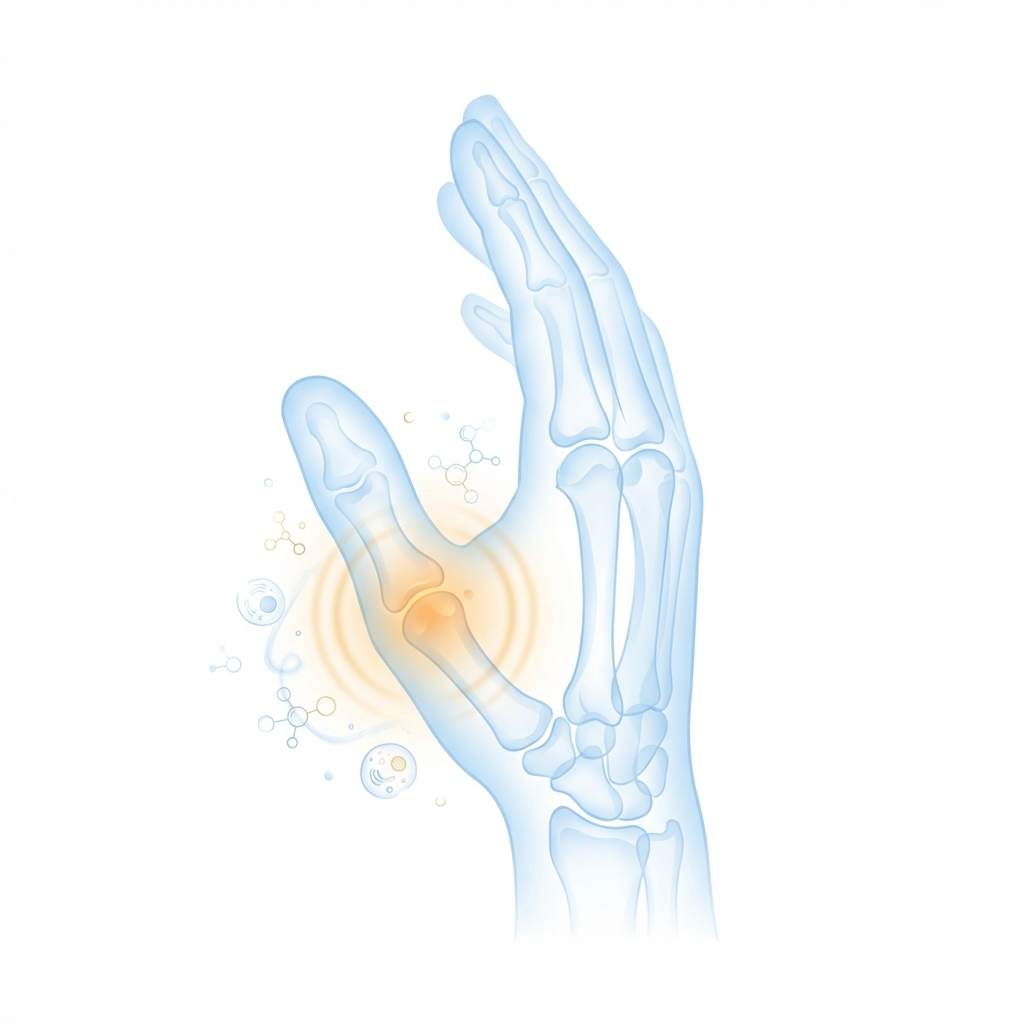
Thumb Arthritis Injection Treatment: The Eaton-Stage Selection Framework That Matches the CMC Joint to the Right Biologic
Introduction: Why the Injection Choice Matters More Than Most Patients Realize
The scenario is familiar to millions: persistent pain at the base of the thumb that makes turning keys, opening jars, and gripping objects an exercise in frustration. When splinting and anti-inflammatory medications no longer provide adequate relief, patients often seek injection therapy—only to discover that the decision is far more nuanced than simply receiving “an injection.”
Thumb carpometacarpal (CMC) arthritis affects 15–36% of women and 5–11% of men, with radiographic prevalence climbing to 39% in women over 80. The condition represents one of the most common forms of hand osteoarthritis, yet many patients are offered injection therapy without understanding a critical principle: disease stage should determine which injection type is appropriate. The wrong choice at the wrong stage may not only fail to provide relief—it may accelerate joint damage.
This article examines the Eaton-Littler staging framework as a practical decision tool that matches patients to the right biologic therapy. Understanding this system matters because the thumb CMC joint is the most common site of surgical reconstruction for osteoarthritis in the upper extremity. A stage-appropriate injection strategy represents a genuine surgery-avoidance tool.
The goal is patient and caregiver empowerment. Those who understand the clinical vocabulary can have more informed conversations with their providers and make decisions aligned with their treatment goals.
Understanding Thumb CMC Arthritis: The Joint, the Damage, and the Stakes
The carpometacarpal joint sits at the base of the thumb where the metacarpal bone meets the trapezium—a small carpal bone in the wrist. This saddle-shaped joint enables the wide range of thumb motion that distinguishes human hand function, allowing opposition, pinch, and grip movements essential to daily tasks.
However, the saddle design that enables mobility sacrifices stability. The joint absorbs significant compressive forces during pinch and grip activities, making it particularly vulnerable to degenerative changes over time. Research indicates that up to 50% of hand function depends on the thumb, which explains why CMC arthritis is particularly disabling.
The progression of joint damage follows a predictable pattern: cartilage erosion leads to joint space narrowing, followed by osteophyte (bone spur) formation, and eventually subluxation (partial dislocation) of the metacarpal. Postmenopausal women face the highest risk, with prevalence roughly 1.3 times higher than men at every age cohort.
The growing demand for non-surgical options has driven significant market expansion. The global thumb arthritis treatment market was valued at $0.47 billion in 2024 and is projected to reach $1.15 billion by 2035, reflecting both aging demographics and innovation in biologic therapies.
The Eaton-Littler Staging System: A Roadmap for Treatment Decisions
The Eaton-Littler classification serves as the standard staging tool used by hand surgeons and orthopedic specialists to guide treatment decisions for thumb CMC arthritis. Staging is based on radiographic (X-ray) findings, and identifying one’s stage is the first step toward choosing the right injection.
This framework is not exclusively for surgeons. Patients who understand their stage can advocate for stage-appropriate care and avoid treatments that may be ineffective or potentially harmful given their level of disease progression.
Stage I: Early Disease — Joint Space Preserved, Ligament Laxity Present
Stage I presents with normal or near-normal joint space on X-ray, possible widening due to synovitis or ligament laxity, and no significant osteophytes. Patients typically experience pain with activity, tenderness at the thumb base, and early weakness in pinch strength.
At this stage, anti-inflammatory agents such as corticosteroids can be highly effective because cartilage remains largely intact—inflammation drives the pain rather than structural damage. Conservative measures including splinting, hand therapy, and NSAIDs are also most likely to succeed at Stage I without injection therapy.
Stage II: Mild Arthritis — Cartilage Beginning to Erode
Stage II shows beginning joint space narrowing, osteophytes less than 2mm, and possible mild metacarpal subluxation. Clinical presentation includes more persistent pain, reduced grip strength, and the onset of pain at rest.
Corticosteroids remain an option at Stage II, but the cartilage-toxicity concern becomes more relevant. Hyaluronic acid and PRP begin to offer advantages here. This stage represents the “sweet spot” for advanced biologics—enough joint space remains for regenerative therapies to have meaningful impact.
The concept of diminishing returns with repeated steroid injections becomes critical at this transition point.
Stage III: Moderate Arthritis — Significant Joint Space Loss
Stage III demonstrates marked joint space narrowing, osteophytes greater than 2mm, possible sclerosis and cystic changes in subchondral bone, and metacarpal subluxation. Patients experience significant functional limitation, pain with minimal activity, and possible deformity development.
Research shows corticosteroids provide only approximately 25% pain relief at this stage—a critical data point for patients still relying on steroid injections. PRP and regenerative biologics such as BMAC and autologous fat become the preferred options.
Stage III represents the last window where injection-based therapy can meaningfully delay or prevent surgical reconstruction.
Stage IV: Advanced Arthritis — Pantrapezial Involvement
Stage IV involves arthritis extending beyond the CMC joint to include the scaphotrapezial and trapeziotrapezoid joints (pantrapezial arthritis) with severe joint destruction. Patients experience constant pain, significant deformity, and severely limited function.
Injections at this stage are primarily palliative—managing pain while surgical planning proceeds. Trapeziectomy and LRTI (ligament reconstruction and tendon interposition) remain established surgical options with good long-term outcomes.
The conversion rate from nonsurgical management to surgery is 22–33%, with most conversions occurring within the first year.
The Three Standard Injection Options: What the Evidence Actually Shows
Understanding the evidence behind each injection type requires honest assessment rather than marketing claims. A 2023 network meta-analysis found no injection superior to placebo at short-term follow-up (≤3 months); differentiation emerges at medium-term (3–12 months).
Corticosteroid Injections: The Clinical Workhorse With Important Caveats
Corticosteroids are potent anti-inflammatory agents that reduce synovial inflammation and provide rapid pain relief. The typical timeline shows meaningful relief at 1–6 months post-injection, making them effective for short-term flare management.
A notable guideline-versus-practice discrepancy exists: EULAR 2018 guidelines recommend against routine intra-articular glucocorticoids in hand OA, yet corticosteroids remain the clinical first-line choice due to accessibility, cost, and familiarity.
Repeated corticosteroid injections show progressively shorter and less effective relief periods. In vitro studies demonstrate cytotoxic effects on chondrocytes, leading many experts to reserve steroid injections for advanced stages where cartilage is already significantly degraded—the opposite of common practice.
Best stage fit: Stage I and selectively Stage II for acute flares, with caution regarding frequency and cumulative dosing.
Hyaluronic Acid (Viscosupplementation): The Slow-Burn Option
Hyaluronic acid restores the viscoelastic properties of synovial fluid, providing lubrication and cushioning rather than direct anti-inflammation. Randomized controlled trials show relief extending beyond 6 months—longer duration than corticosteroids, though with slower onset.
An important regulatory caveat: HA is FDA-approved only for knee OA. Use in thumb CMC is off-label, which often means insurance will not cover the cost.
A 2025 systematic review found no difference between corticosteroid and HA injections at one year, suggesting HA’s main advantage is duration of effect rather than superior efficacy. Patients considering this option may find it helpful to review a hyaluronic acid injection frequency guide to understand dosing considerations.
Best stage fit: Stage I–II, particularly for patients who cannot tolerate steroids or have exhausted their steroid injection allotment.
PRP (Platelet-Rich Plasma): The Emerging Medium-Term Leader
PRP concentrates growth factors from the patient’s own blood to promote tissue repair, reduce inflammation, and potentially support cartilage health.
Key efficacy data includes a prospective RCT in which PRP improved median VAS pain scores from 7.5 to 2.0 at 12 months, versus 7.0 to 6.5 in the corticosteroid group. Retrospective studies demonstrate that 68.8% of PRP-injected joints rated moderate or excellent improvement, with a mean patient-reported duration of benefit of 15.6 months.
The 2023 network meta-analysis found PRP showed superiority over placebo and corticosteroids at medium-term (3–12 months). A 2025 systematic review confirmed PRP patients reported improved function, pain relief, and higher overall satisfaction compared to corticosteroids.
PRP is typically an out-of-pocket expense, which remains a meaningful consideration. For a detailed overview of how this therapy works, the platelet-rich plasma PRP therapy comprehensive guide provides additional context on preparation, protocols, and expected outcomes.
Best stage fit: Stage II–III—particularly valuable for patients seeking lasting relief who are motivated to avoid surgery.
The Injection Accuracy Problem That Is Frequently Overlooked
Fluoroscopy has demonstrated a 42% inaccuracy rate for blind (landmark-guided) injections into the thumb CMC joint. A prospective study of 102 hands confirmed that intra-articular injection provides significantly greater pain relief and functional improvement than extra-articular injection at three months. Approximately 20% of injections intended to be intra-articular are actually delivered outside the joint.
The thumb CMC joint’s small size, irregular saddle shape, and surrounding soft tissue make accurate landmark-guided placement particularly challenging. Ultrasound and fluoroscopic guidance confirm needle placement in real time, ensuring the therapeutic agent reaches the joint space. Understanding the benefits of ultrasound-guided PRP injection can help patients appreciate why image guidance is a critical component of effective injection therapy.
The practical takeaway: Guidance matters most for ensuring patients receive the treatment they are paying for; the choice of biologic determines how long it works.
Advanced and Emerging Biologics: Beyond the Standard Three
These options represent the frontier of thumb CMC injection therapy and are particularly relevant for Eaton Stage II–III patients who have not achieved adequate relief from standard injections.
BMAC (Bone Marrow Aspirate Concentrate)
BMAC is derived from the patient’s own bone marrow and contains mesenchymal stem cells, growth factors, and anti-inflammatory cytokines. The presence of mesenchymal stem cells may support chondrocyte repair and slow cartilage degradation—particularly relevant for Stage II–III where some cartilage remains. Patients interested in this approach can learn more about what a BMAC injection involves and how it differs from other regenerative options.
Autologous Fat (Lipofilling/Liparthroplasty)
Autologous fat harvested from the patient acts as a physical cushion and lubricant while delivering adipose-derived mesenchymal stem cells with chondroregenerative potential. A 2023 systematic review found that all reviewed human studies showed reduction in pain and improvement in hand function, with more noticeable pain relief in severe OA (Stage II–III).
Matching Eaton Stage to the Right Injection: A Practical Framework
| Stage | First-Line Option | Alternative Options | Key Considerations |
|---|---|---|---|
| Stage I | Corticosteroid | HA | Conservative measures should accompany injection |
| Stage II | PRP | HA; Corticosteroid for acute flares only | Transition zone; limit steroid frequency |
| Stage III | PRP | BMAC; Autologous fat; Combination approaches | Last window for joint preservation |
| Stage IV | Palliative injection | Surgical consultation | Surgical planning recommended |
Critical red flag: Patients who fail to achieve pain relief within one week of injection have 3.14 times higher odds of progressing to surgery—early reassessment is essential.
Questions to Ask a Provider Before the Next Thumb Injection
Patients can advocate for appropriate care by asking:
- “What is my Eaton stage, and how does that affect which injection is right for me?”
- “Will this injection be image-guided to confirm accurate placement?”
- “How many corticosteroid injections have I had, and are we approaching the point where cartilage-toxicity risk outweighs benefit?”
- “Am I a candidate for PRP, BMAC, or autologous fat injection given my stage and prior treatment history?”
- “What is the plan if meaningful relief is not achieved within one week?”
Conclusion: Stage-Matched Injection Therapy Is the Future of Thumb CMC Care
Thumb arthritis injection treatment is not a one-size-fits-all decision. Eaton stage, injection accuracy, and biologic selection all determine whether a patient achieves lasting relief or accelerates toward surgery.
Corticosteroids are powerful but carry diminishing returns and cartilage-toxicity concerns with repeated use. PRP outperforms corticosteroids at medium-term for Stage II–III. Emerging biologics such as BMAC and autologous fat offer regenerative potential for patients who want to preserve joint integrity. For those exploring the full landscape of non-surgical treatment for osteoarthritis, understanding how these injection options fit within a broader conservative care strategy is an important step.
Understanding the Eaton staging system and the evidence behind each injection type positions patients to make informed decisions, ask better questions, and potentially avoid the most common upper-extremity surgical reconstruction.
Ready to Explore Stage-Appropriate Injection Therapy for Thumb CMC Arthritis?
Unicorn Bioscience offers the full spectrum of advanced, image-guided injection therapies—including PRP, BMAC, and hyaluronic acid—tailored to each patient’s individual stage and goals. With ultrasound and X-ray guided precision delivery and personalized treatment planning based on individual patient factors including age, inflammation levels, and health goals, patients receive a multi-modal approach that goes beyond standard injection types.
Virtual and in-person consultations are available across eight locations in Texas, Florida, and New York. For patients at Eaton Stage II–III who want to preserve joint integrity and avoid surgical reconstruction, a personalized regenerative injection strategy may be the most important step they take.
Schedule a consultation with Unicorn Bioscience to discuss which injection therapy matches your Eaton stage and treatment goals. Call (737) 347-0446 or visit unicornbioscience.com to get started.
Schedule Your Consultation Today!