
Sacroiliac Joint Regenerative Treatment: The Intra-Articular vs. Peri-Articular Protocol That Determines Which Biologic Reaches Your Pain Source
Sacroiliac Joint Regenerative Treatment: The Intra-Articular vs. Peri-Articular Protocol That Determines Which Biologic Reaches the Pain Source
Introduction: Why Most SI Joint Regenerative Therapy Conversations Start in the Wrong Place
Sacroiliac joint pain accounts for approximately 15–30% of all mechanical low back pain cases, yet it remains one of the most underdiagnosed sources of chronic pain. Millions of patients suffer from this condition, often cycling through ineffective treatments because the underlying pain source was never accurately identified or appropriately targeted.
The central problem in many regenerative therapy discussions is a fundamental misunderstanding: patients and even some providers discuss “regenerative therapy for the SI joint” as if it were a single, interchangeable option. In reality, injection placement fundamentally determines which biologic can work—and whether the therapeutic agent ever reaches the tissue generating pain.
This article presents a critical organizing framework: intra-articular vs. peri-articular placement is not a procedural footnote—it is the clinical decision that dictates biologic selection, target tissue, and realistic outcomes. Understanding this distinction transforms patients from passive recipients into informed participants in their treatment planning.
The evidence landscape requires honest acknowledgment upfront. Current data for regenerative SI joint treatments is rated GRADE Level IV (limited), and this article maintains transparency about what that means for patients making treatment decisions. The three primary regenerative modalities covered—PRP, BMAC, and prolotherapy—each map to different pathologies and injection approaches.
Approximately 25% of adults with chronic low back pain have SI joint dysfunction as the primary driver, with women disproportionately affected due to greater joint mobility and ligament strain. For these patients, understanding the relationship between injection site and biologic selection may be the difference between treatment success and continued suffering.
Understanding the Sacroiliac Joint: Anatomy That Makes Injection Placement Critical
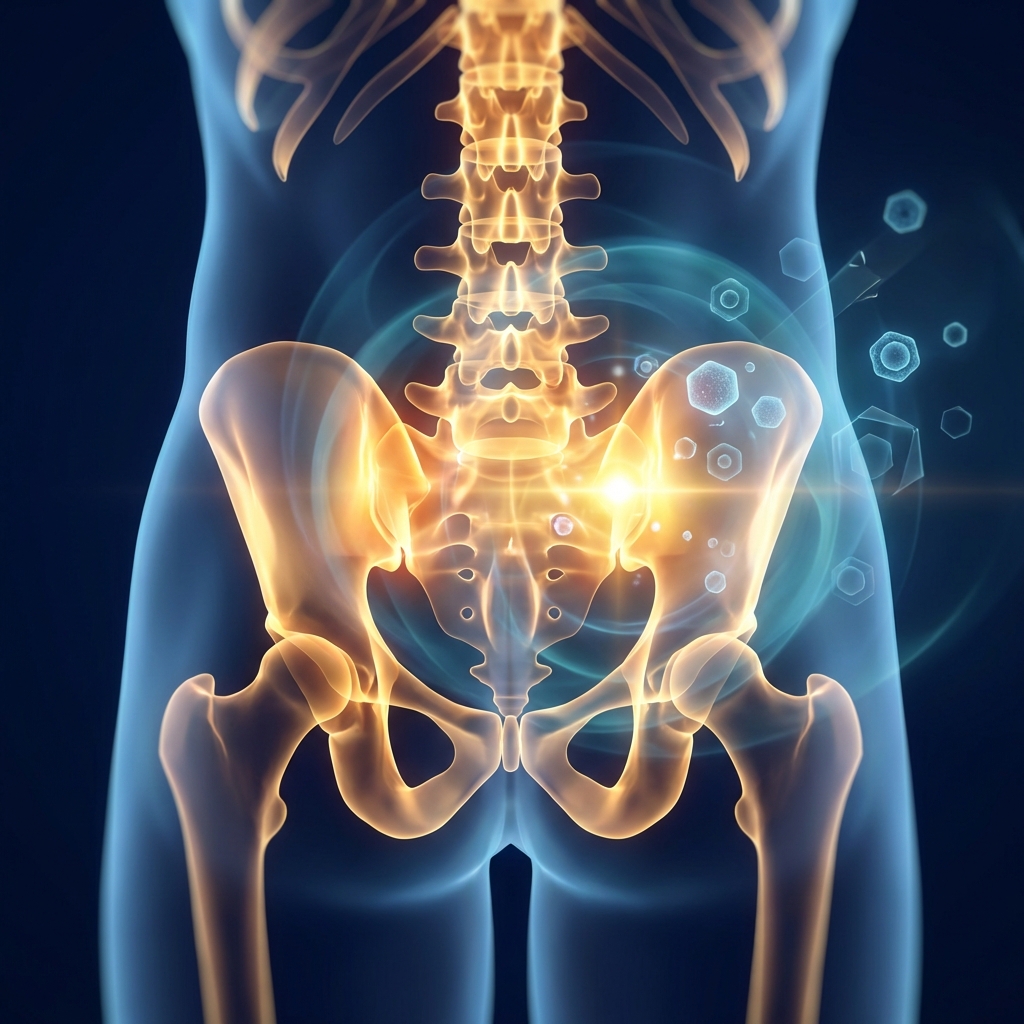
The sacroiliac joint is a complex, weight-bearing structure that is part synovial (intra-articular, cartilage-lined) and part syndesmosis (fibrous, ligament-dependent). This dual nature is precisely why placement matters—different tissues require different therapeutic approaches.
Three distinct pain-generating tissue zones exist within and around the SI joint:
- The intra-articular synovial cavity – where cartilage degeneration and synovitis occur
- The posterior ligamentous complex – including the interosseous, posterior sacroiliac, sacrotuberous, and sacrospinous ligaments
- The joint capsule and surrounding periarticular soft tissue
The intra-articular space presents significant technical challenges. It is small, irregular, and partially inaccessible—making blind injections unreliable and image guidance essential for accurate biologic delivery.
Ligamentous laxity (a peri-articular problem) and synovitis or cartilage degeneration (intra-articular problems) require fundamentally different treatment targets. A biologic designed to regenerate cartilage delivers minimal benefit when injected into ligaments, and vice versa.
Key risk factors for SI joint dysfunction include female sex, pregnancy, prior lumbar fusion, obesity, hypermobility syndromes such as Ehlers-Danlos syndrome, and occupational or athletic overuse. Notably, up to 40–63% of failed back surgery syndrome patients have the SI joint as a contributing pain source—significantly expanding the relevant patient population.
The Two Injection Approaches: Intra-Articular vs. Peri-Articular — What Each Actually Targets
Intra-articular injection involves placing the biologic directly inside the synovial joint cavity, targeting synovitis, cartilage degeneration, and intra-articular inflammatory processes.
Peri-articular injection involves placement around the joint—into the posterior ligamentous complex, joint capsule, or adjacent soft tissue—targeting ligamentous laxity, capsular instability, and enthesopathy.
The SI joint’s irregular, partially fused anatomy means true intra-articular access is only reliably achieved under fluoroscopic or CT guidance. Ultrasound is more commonly used for peri-articular targets due to its ability to visualize soft tissue structures without radiation exposure.
Choosing the wrong approach—for example, injecting a biologic peri-articularly when the pain source is intra-articular synovitis—means the therapeutic agent never reaches the pain-generating tissue. The treatment may be technically successful but clinically meaningless.
Some protocols intentionally combine both approaches in a single session, particularly for patients with mixed pathology affecting both the joint interior and surrounding ligamentous structures.
The injection approach is not merely a technical detail—it is the primary variable that determines biologic selection.
Regenerative Modality #1: PRP (Platelet-Rich Plasma) — Best Matched to Which Pathology and Which Approach
Platelet-rich plasma represents a concentration of the patient’s own platelets—up to 10x normal blood concentration—rich in growth factors including FGF, TGF-β1, PDGF, and PDAF. These growth factors stimulate angiogenesis, fibroblast differentiation, collagen synthesis, and tissue healing, potentially accelerating wound healing 2–3x faster than normal.
PRP’s best-matched pathologies include:
- Ligamentous laxity and soft tissue insufficiency (peri-articular)
- Early-stage synovitis (intra-articular)
PRP’s anti-inflammatory and tissue-regenerative properties address both conditions, but the injection site must match the dominant pain source.
A 2024 multispecialty consensus report concluded that PRP may have efficacy for SIJ-related pain, though further high-quality studies are needed. A 2025 systematic review rated evidence GRADE Level IV with a weak recommendation.
For peri-articular applications specifically, image-guided PRP injection into the posterior ligamentous complex is a well-described technique for ligament reinforcement and pain reduction.
The adverse effect profile is generally mild, consisting primarily of post-injection pain and stiffness. No serious adverse events have been reported across published SIJ PRP studies—a meaningful safety signal for patients weighing treatment options.
Regenerative Modality #2: BMAC (Bone Marrow Aspirate Concentrate) — When Cartilage and Structural Repair Are the Goal
The dual mechanism involves anabolic effects supporting cartilage matrix synthesis and anti-inflammatory effects reducing synovial inflammation—making BMAC particularly suited for intra-articular pathology.
BMAC’s best-matched pathology: cartilage degeneration and synovitis within the intra-articular space—conditions where structural repair, not just pain modulation, is the therapeutic goal.
BMAC is generally reserved for intra-articular delivery because its cartilage-regenerative potential is most relevant when it can reach the synovial environment. Peri-articular placement may still provide anti-inflammatory benefit but does not leverage the full regenerative profile.
A 2025 case series demonstrated significant pain score improvement at 6 months, 3 years, and 6 years post-MSC injection, including SI joint applications.
BMAC represents the most technically and financially demanding option, with costs typically ranging from $2,000–$8,000 depending on cell source and processing protocol. Patients considering this approach can learn more about the bone marrow concentrate injection procedure to understand what the process involves.
Regenerative Modality #3: Prolotherapy — The Peri-Articular Specialist With the Strongest Comparative Data
Prolotherapy involves injection of a hyperosmolar dextrose solution into ligamentous and periarticular structures to stimulate a localized inflammatory healing response and promote ligament strengthening.
Prolotherapy is inherently a peri-articular treatment. Its mechanism targets fibrous connective tissue rather than synovial or cartilaginous structures—making it the most logically matched modality for ligamentous laxity.
The comparative evidence is compelling: one RCT showed 58.7% of prolotherapy patients achieved ≥50% pain relief at 15 months vs. only 10.2% in the corticosteroid group—a clinically meaningful durability advantage.
A 2025 study on prolotherapy for SI joint instability in Ehlers-Danlos syndrome patients showed median VAS pain scores dropped from 5 to 2 after a median 9-month follow-up, with 90% reporting improved athletic ability and satisfaction.
Prolotherapy is especially well-suited for patients whose SI joint pain is driven by ligamentous laxity—including postpartum women, EDS patients, and post-lumbar fusion patients with secondary SI joint stress.
The limitation is clear: prolotherapy does not address intra-articular cartilage degeneration or synovitis. Patients with predominantly intra-articular pathology are unlikely to achieve optimal results with prolotherapy alone.
Matching Pathology to Protocol: A Decision Framework for Patients and Providers
The mapping framework is straightforward once the underlying pathology is identified:
| Pathology | Recommended Approach | Primary Biologic Options |
|---|---|---|
| Ligamentous laxity/instability | Peri-articular | Prolotherapy, PRP |
| Synovitis/early inflammation | Intra-articular | PRP |
| Cartilage degeneration | Intra-articular | BMAC |
| Mixed pathology | Combination | Intra-articular + Peri-articular |
Pathology identification typically requires provocative physical exam tests (FABER, Gaenslen’s, thigh thrust), diagnostic image-guided injection with local anesthetic for pain source confirmation, and imaging (MRI, CT) to assess structural integrity.
No universally accepted treatment algorithm exists for SI joint pain as of 2025—underscoring the importance of individualized assessment over protocol-driven treatment.
What the Evidence Actually Says: Navigating GRADE Level IV in an Honest Conversation
GRADE Level IV evidence represents limited evidence, typically from small observational studies or case series, with a weak recommendation. This means the treatment may be beneficial, but the certainty is low.
The 2025 systematic review found only 2 RCTs and 3 observational studies specifically on MSC/PRP for SI joint pain—a remarkably thin evidence base for a condition affecting 15–30% of chronic low back pain patients.
However, “limited evidence” is not the same as “evidence of no effect.” GRADE Level IV means the studies that exist are small and methodologically limited, not that the treatments have been tested and found ineffective.
As of 2026, neither PRP nor stem cell therapy is FDA-approved for SI joint dysfunction. Autologous minimally-manipulated procedures performed by physicians are permissible under current FDA frameworks.
The honest patient conversation: GRADE Level IV evidence with a weak recommendation means these treatments are reasonable options for appropriately selected patients who have not responded to conservative care—not experimental gambles, but also not proven certainties. For a deeper look at how to evaluate the regenerative medicine clinical evidence framework, patients can review the standards used to assess these treatments.
How Regenerative Therapy Fits Within the Broader SI Joint Treatment Continuum
The standard SI joint treatment ladder progresses through:
- Conservative care (physical therapy, NSAIDs, activity modification)
- Diagnostic and therapeutic corticosteroid injections
- Regenerative therapy
- Radiofrequency ablation (RFA)
- Minimally invasive SI joint fusion
Regenerative therapy is typically considered after conservative measures and corticosteroid injections have failed—not as a first-line intervention.
Corticosteroids provide faster short-term relief but do not address underlying tissue pathology and may accelerate cartilage degeneration with repeated use. Regenerative therapies aim to modify the tissue environment rather than simply suppress symptoms.
Approximately 80% of patients report clinically significant pain relief following SI joint fusion, but fusion is irreversible and reserved for cases where all other interventions have failed. Patients exploring non-surgical options for related spinal conditions may also find value in reviewing spine pain non-surgical options as part of their broader treatment planning.
Insurance, Cost, and Access: What Patients Need to Know
Most major insurers classify PRP and stem cell injections as “experimental” or “investigational” for musculoskeletal conditions—meaning the majority of patients pay out-of-pocket.
Realistic cost ranges:
- PRP: Lower end of $2,000–$10,000 spectrum
- BMAC/stem cell: $2,000–$8,000 depending on cell source
- Prolotherapy: Generally the most affordable option
The “experimental” classification is directly tied to the GRADE Level IV evidence status. Insurers require higher-quality RCT evidence before approving coverage, creating a circular barrier for patients who might otherwise benefit.
What to Ask a Provider
Before proceeding with SI joint regenerative treatment, patients should ask:
- “How will you confirm that the SI joint is the primary pain source?” — Look for diagnostic image-guided local anesthetic injection, not clinical exam alone.
- “Will the injection be intra-articular, peri-articular, or both—and how does that match the specific pathology?”
- “What image guidance will you use, and why?” — Fluoroscopy for intra-articular access, ultrasound for peri-articular targets.
- “What is the evidence base for the specific biologic being recommended?” — Look for honest acknowledgment of current evidence limitations.
- “What does the full treatment protocol look like?” — Including number of sessions, follow-up schedule, and adjunct therapies.
Conclusion: The Injection Site Is the Strategy — Not an Afterthought
In SI joint regenerative treatment, the decision about where to inject is inseparable from the decision about what to inject—and both must be driven by accurate diagnosis of the pain-generating tissue.
The modality-pathology-approach mapping is clear: prolotherapy and PRP for peri-articular ligamentous laxity; PRP for early intra-articular synovitis; BMAC for cartilage degeneration requiring structural repair; combination protocols for mixed pathology.
GRADE Level IV evidence with a weak recommendation means these are reasonable, not reckless, options for appropriately selected patients who have not responded to conventional care. The current limitations represent a snapshot, not a verdict, as the evidence base continues to develop.
Understanding the intra-articular vs. peri-articular distinction, the available biologic options, and the honest evidence landscape positions patients to have more productive conversations with their providers and make decisions that genuinely reflect their pathology and goals.
Ready to Explore Whether Regenerative SI Joint Treatment Is Appropriate?
Unicorn Bioscience offers multiple regenerative modalities—including PRP, BMAC, and prolotherapy—with precision image-guided injection protocols. Treatment protocols are developed based on individual patient factors including inflammation levels, age, injury type, prior treatment history, and personal health goals.
Same-day treatment is available for qualified candidates, with virtual consultations offered for patients who want to begin the conversation remotely.
Schedule a consultation to discuss SI joint symptoms, review diagnostic history, and explore whether a regenerative protocol is appropriate. Contact Unicorn Bioscience at (737) 347-0446 or visit unicornbioscience.com. Locations are available across Austin, Dallas, El Paso, Fort Worth, Houston, San Antonio, Boca Raton, and Manhattan.
Schedule Your Consultation Today!