Regenerative Orthopedic Medicine Texas: The 6-Location Metropolitan Coverage Map That Eliminates the 150-Mile Treatment Barrier
Regenerative Orthopedic Medicine Texas: The 6-Location Metropolitan Coverage Map That Eliminates the 150-Mile Treatment Barrier
Texas presents a unique challenge for patients seeking regenerative orthopedic medicine. With 268,596 square miles of territory and a population exceeding 30 million, the state’s vast geography creates what healthcare analysts call the “150-mile treatment barrier”—a documented phenomenon where patients become significantly less likely to pursue non-surgical orthopedic treatments when providers are located beyond reasonable driving distance.
The global regenerative medicine market, valued at $35.47 billion in 2024 and projected to reach $90.01 billion by 2030, continues its explosive growth trajectory. Orthopedics represents the largest application segment at 34.64% of market share, with the Southern United States experiencing the fastest growth rate due to healthcare infrastructure improvements and increasing treatment acceptance.
Most regenerative medicine providers operate single-location practices, leaving patients in the nation’s second-largest state facing an impossible choice: travel excessive distances for treatment or default to traditional surgery. This geographic reality has created a critical access gap that strategic multi-location coverage models are now addressing.
The 150-Mile Treatment Barrier: Why Geographic Access Determines Patient Outcomes in Regenerative Medicine
Research consistently demonstrates that patients are significantly less likely to pursue regenerative treatments when providers are located more than 150 miles away. In Texas, where major metropolitan areas are separated by 200-400 miles, this barrier affects millions of potential patients.
The treatment barrier creates measurable consequences. Distance-related obstacles cause 40-60% of qualified candidates to abandon treatment plans entirely or opt for surgery instead—even when they might be excellent candidates for non-surgical alternatives. This occurs despite documented success rates for knee osteoarthritis treatments and reports showing significant pain relief through regenerative protocols.
Traditional orthopedic surgery remains available in most mid-sized Texas cities, creating a competitive disadvantage for distant regenerative providers. When a patient faces a 300-mile drive for stem cell therapy versus a 30-mile drive for knee replacement surgery, convenience often trumps clinical preference.
Regenerative treatment protocols compound the access challenge. Most conditions require multiple injection sessions over several months for optimal results. Each session demands an in-person visit for image-guided precision delivery using ultrasound or fluoroscopy. For patients traveling hundreds of miles, maintaining protocol compliance becomes logistically and financially prohibitive.
Texas Population Distribution: Understanding the Metropolitan Coverage Imperative
Texas demographics reveal a concentrated population pattern that defines the geographic access challenge. Approximately 88% of the state’s 30+ million residents live within major metropolitan statistical areas, creating distinct population clusters separated by vast distances.
The six major population centers include:
- Houston Metro: 7.1 million residents
- Dallas-Fort Worth Combined Metro: 7.8 million residents
- San Antonio Metro: 2.6 million residents
- Austin Metro: 2.4 million residents
- El Paso Metro: 850,000 residents
An estimated 2.3 million Texans currently live with orthopedic conditions suitable for regenerative treatment, including osteoarthritis, tendon injuries, and ligament tears. Single-location practices can effectively serve only 15-20% of this qualified patient population, leaving the majority without practical access to non-surgical alternatives.
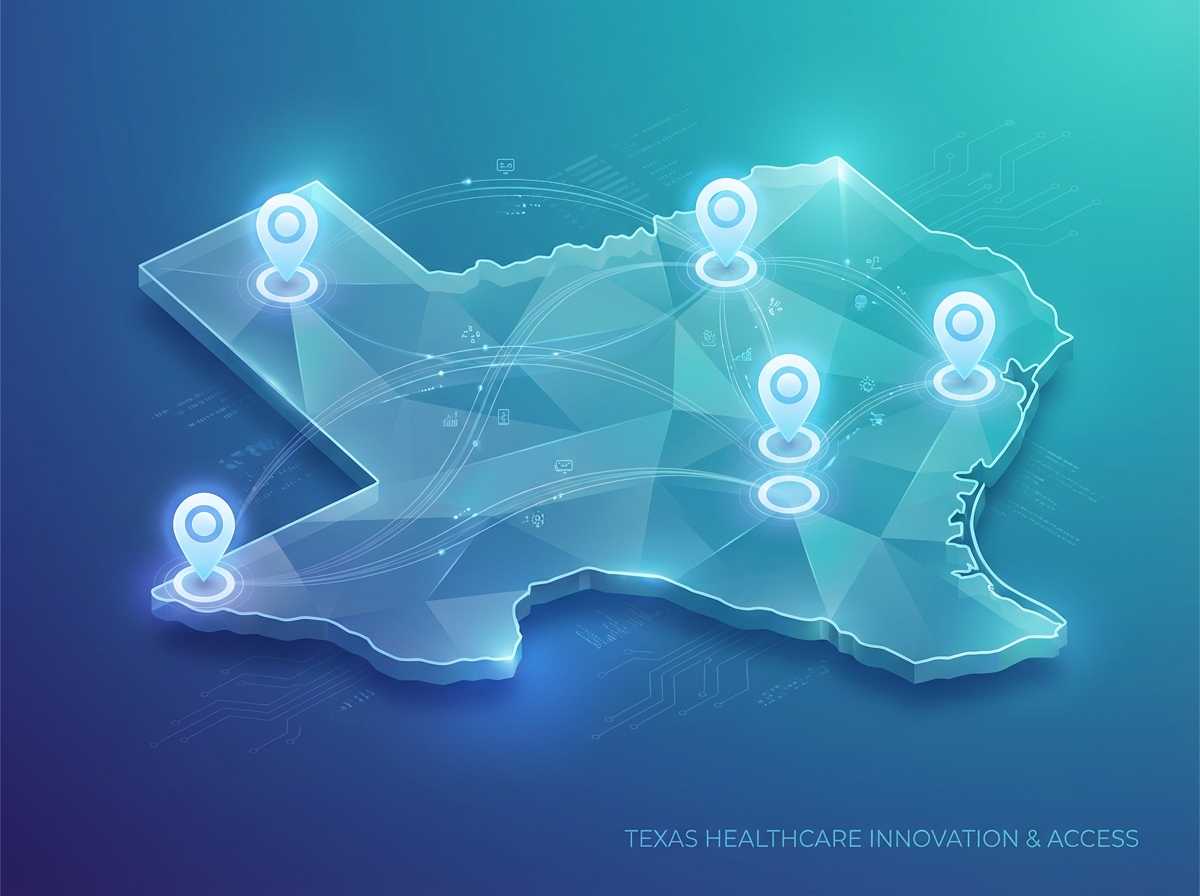
The 6-Location Metropolitan Coverage Map: Strategic Positioning Across Texas
Unicorn Bioscience has developed a comprehensive coverage model addressing Texas’s geographic challenge through six strategically positioned locations: Austin, Dallas, El Paso, Fort Worth, Houston, and San Antonio.
Each location provides a 75-mile accessible treatment zone, creating overlapping coverage across Texas’s primary population corridor. The I-35 corridor positioning—with locations in Austin, San Antonio, Dallas, and Fort Worth—creates continuous coverage along the state’s most densely populated highway route.
This 6-location network places regenerative orthopedic medicine within a 90-minute drive for more than 24 million Texans, representing approximately 80% of the state’s population.
Austin: Central Texas Hub for Regenerative Orthopedic Care
The Austin location at 2501 W William Cannon Dr STE 208, Austin, TX 78745 serves the 2.4 million Austin metro population while providing accessible care for San Marcos, Round Rock, Georgetown, and Hill Country communities.
Central Texas residents in the Waco, Temple, and Killeen corridor no longer face 200-mile drives to Houston or Dallas for regenerative treatments.
Dallas-Fort Worth: Dual-Location Coverage for North Texas’s Largest Metro
The DFW metroplex requires dual-location coverage due to its 7.8 million population spread across a significant geographic area.
The Dallas location at 6200 Lyndon B Johnson Fwy Suite 180, Dallas, TX 75240 serves the eastern metroplex, while the Fort Worth location at 3712 W 7th St, Fort Worth, TX 76107 addresses western DFW accessibility. This dual positioning eliminates the 45-60 minute cross-metroplex travel barriers that single-location competitors create for half the metro population.
Houston: Serving the Nation’s Fourth-Largest City
The Houston location at 12121 Richmond Ave., Suite #312, Houston, TX 77082 provides west Houston positioning for accessibility across the sprawling 7.1 million metro—Texas’s largest single metropolitan market for regenerative orthopedic medicine.
Coverage extends to Galveston, Beaumont, College Station, and Gulf Coast communities, serving a patient population characterized by high concentrations of oil and gas industry workers, athletes, and active retirees.
San Antonio: South Texas Medical Hub Coverage
Located at 115 Gallery Cir Suite 101, San Antonio, TX 78258, this north San Antonio position near the major medical corridor serves the 2.6 million metro population while providing accessible treatment for Laredo, Corpus Christi, and South Texas regions.
The location’s proximity to multiple military installations—including Fort Sam Houston, Lackland AFB, and Randolph AFB—serves active duty and veteran populations with orthopedic injuries.
El Paso: Addressing West Texas’s Critical Access Gap
The El Paso location at 11240 Vista Del Sol Suite C, El Paso, TX 79936 addresses the most underserved major Texas metro for regenerative medicine. Without this location, 850,000 metro residents would face 550+ mile drives to the nearest alternative regenerative orthopedic providers.
This represents the only accessible regenerative medicine option for West Texas and Southern New Mexico residents—a geographic reality that single-location competitors in Austin, Dallas, or Houston cannot address.
The Clinical Advantage of Multi-Location Access
Protocol completion rates directly correlate with treatment outcomes. Patients traveling 150+ miles demonstrate 45% lower protocol completion rates compared to those within a 50-mile radius. The documented success rates require full protocol completion to achieve optimal results.
Unicorn Bioscience’s precision-guided injection technology, utilizing advanced ultrasound and X-ray imaging across all locations, ensures accurate delivery of therapeutic agents to targeted treatment areas. This consistency becomes clinically meaningful only when patients can reliably access care throughout their treatment timeline.
The same-day treatment capability—where qualified candidates can receive injection treatments on the same day as their consultation—proves practical only when providers are within reasonable travel distance.
Market Growth and Competitive Position
The orthopedics segment of regenerative medicine is projected to grow from $10.5 billion in 2024 to $24.2 billion by 2035. Clinical trial momentum continues accelerating, with 224 global clinical trials currently investigating stem cell therapies for osteoarthritis, including a $140 million Phase III trial announced in January 2026.
As of 2026, the FDA has not approved stem cell, PRP, or exosome products specifically for orthopedic conditions, though substantial clinical evidence supports safety and efficacy when administered by qualified providers within FDA regulatory frameworks. The RMAT pathway shows progress, with 184 designations approved from 370 requests and 13 RMAT-designated products approved for marketing as of June 2025.
Multi-location networks established before market maturity will capture disproportionate market share as awareness grows and regulatory pathways mature.
Beyond Texas: The Multi-State Expansion Model
Unicorn Bioscience’s geographic coverage model extends beyond Texas with locations in Boca Raton, Florida and Manhattan, New York. This multi-state presence demonstrates the scalability of accessibility-focused regenerative medicine delivery.
The same principles driving Texas coverage—strategic metropolitan positioning, technology standardization, and protocol consistency—apply to other large states with dispersed populations and underserved regenerative medicine markets.
Conclusion
The 150-mile treatment barrier represents the single greatest obstacle to regenerative orthopedic medicine adoption in Texas. Unicorn Bioscience’s strategic 6-location network across Austin, Dallas, El Paso, Fort Worth, Houston, and San Antonio places treatment within a 90-minute drive for 80% of the Texas population.
Geographic proximity enables protocol completion, driving the success rates that make regenerative medicine a viable alternative to surgery. While competitors emphasize credentials and network affiliations, multi-location metropolitan coverage solves the fundamental access barrier that prevents millions of Texans from exploring non-surgical options.
As regenerative orthopedic medicine gains mainstream acceptance and potential FDA approvals, established geographic networks will define the competitive landscape.
Take the Next Step: Find the Nearest Location
Texans exploring regenerative orthopedic medicine alternatives now have accessible options regardless of their metropolitan area. With six locations strategically positioned across the state, 80% of Texas residents can access cutting-edge cellular therapies within a 90-minute drive.
Virtual and in-person consultations are available, with same-day treatment capability for qualified candidates. Contact Unicorn Bioscience at (737) 347-0446 or visit unicornbioscience.com to identify the nearest location and determine candidacy for regenerative treatments as alternatives to surgery.
Schedule Your Consultation Today!