
Neck Pain Cellular Therapy: The C3–C6 Facet Protocol That Targets the Cervical Spine’s Unique Regenerative Challenges
Neck Pain Cellular Therapy: The C3–C6 Facet Protocol That Targets the Cervical Spine’s Unique Regenerative Challenges
Introduction: Why Generic ‘Neck Pain Treatment’ Advice Falls Short
Neck pain represents one of the most significant global health challenges of the modern era. According to the Global Burden of Disease Study 2021, neck pain affected 203 million people worldwide in 2020, with projections indicating this number will reach 269 million by 2050—a 32.5% increase driven primarily by aging populations. Back and neck pain ranks as the third most common reason patients of all ages visit physicians in the United States, trailing only skin conditions and osteoarthritis.
Despite these staggering numbers, patients searching for neck pain cellular therapy often encounter generic procedure descriptions that treat the cervical spine as an afterthought to lumbar care. This represents a significant gap in patient education and clinical understanding.
The cervical spine—specifically the C3–C6 segment—presents distinct anatomical, biomechanical, and regenerative challenges that demand a condition-specific cellular therapy framework rather than a one-size-fits-all injection protocol. This article examines four primary cellular modalities—mesenchymal stem cells, platelet-rich plasma, bone marrow aspirate concentrate, and exosomes—and their application to three cervical conditions: facet arthritis, disc degeneration, and chronic axial neck pain.
For patients who have exhausted conservative options and are evaluating evidence-based regenerative alternatives before committing to surgical intervention, understanding these distinctions is essential. As of 2026, the FDA has not approved stem cell, PRP, or exosome products specifically for orthopedic conditions; these therapies are administered within FDA regulatory frameworks as investigational treatments.
The Cervical Spine’s Unique Anatomy: Why C3–C6 Is the Regenerative Epicenter
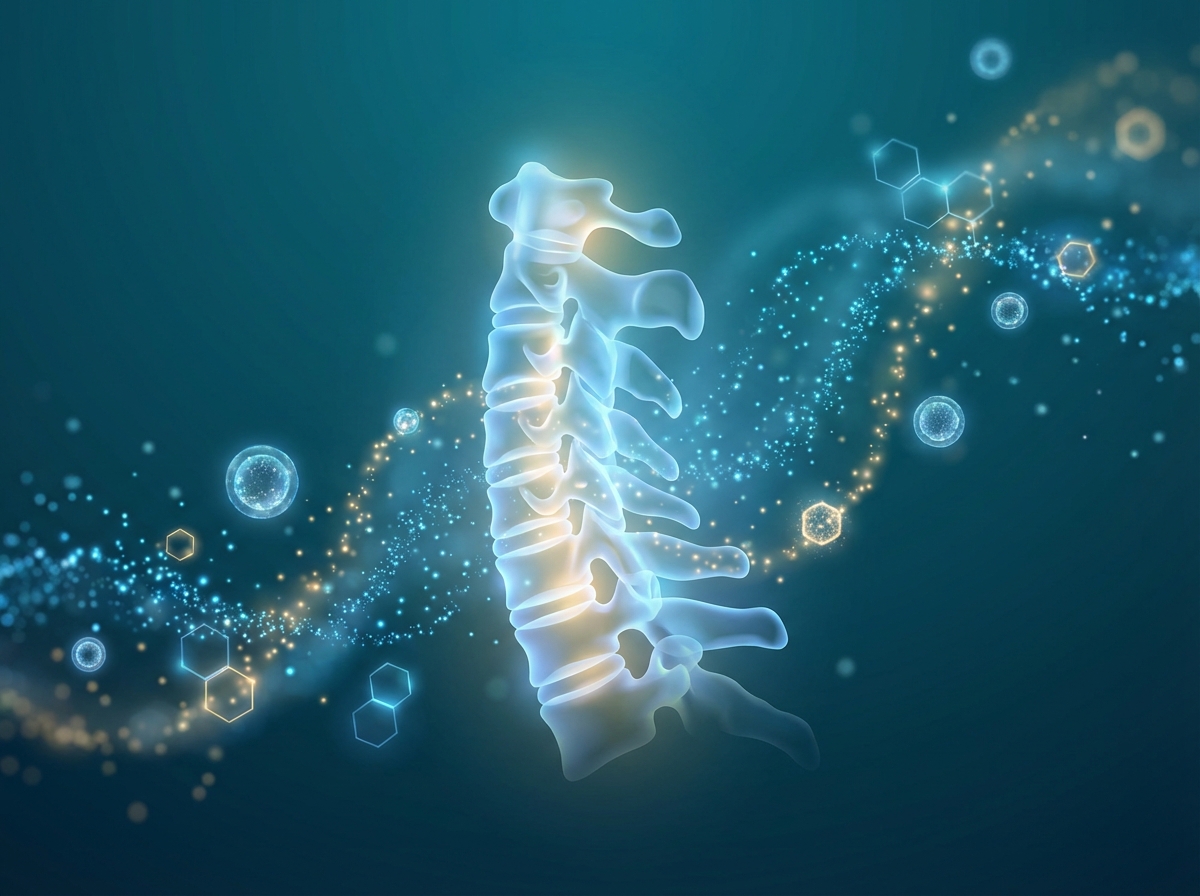
The cervical spine comprises seven vertebrae (C1–C7), with C3–C6 accounting for the majority of degenerative facet and disc pathology due to its role as the primary motion segment. The facet joints (zygapophyseal joints) at these levels feature synovial structure and cartilage-lined surfaces that are particularly susceptible to osteoarthritic degeneration from repetitive flexion-extension loading.
Compared to the lumbar spine, cervical regenerative challenges are substantially more complex. The cervical region features smaller joint surfaces, tighter anatomical corridors, and critical proximity to the spinal cord, nerve roots, vertebral arteries, and esophagus—all of which complicate injection delivery and cell dosing.
The biomechanical demands on the cervical spine are considerable. This region supports the head (approximately 10–12 pounds), undergoes multi-planar movement hundreds of times daily, and has limited capacity for post-injection immobilization compared to the lumbar spine.
Cervical discs are particularly vulnerable to degeneration. Research published in PMC demonstrates that the nucleus pulposus loses notochordal cells early in the degenerative process, triggering matrix metalloproteinase activity, proteoglycan depletion, disc dehydration, and eventual nerve root compression. Because spinal discs have no blood supply, they cannot self-heal through conventional inflammatory repair mechanisms—this avascular nature forms the core biological rationale for introducing regenerative cells directly into the tissue.
The cervical disc’s avascular, immune-privileged environment can also be hostile to transplanted cells, affecting engraftment and long-term viability—a challenge that sophisticated cellular therapy protocols must address.
The Three Cervical Conditions That Respond to Cellular Therapy
Before evaluating which cellular modality is most appropriate, patients must understand their specific diagnosis. Three primary conditions warrant consideration: cervical facet arthritis, cervical intervertebral disc degeneration, and chronic axial neck pain. While these conditions often co-exist, they have distinct regenerative targets.
Cervical Facet Arthritis (C3–C6)
Cervical facet arthritis involves progressive degeneration of the synovial cartilage lining the zygapophyseal joints, most commonly at C3–C4, C4–C5, and C5–C6 levels. The symptom profile includes axial neck pain, stiffness, referred pain to the occiput or shoulder girdle, and pain that worsens with extension and rotation—distinguishing it from radiculopathy.
Facet arthritis represents a strong candidate for cellular therapy because the synovial joint environment is relatively accessible for injection. MSC-derived exosomes have demonstrated the ability to promote chondrocyte proliferation, inhibit apoptosis, reduce pro-inflammatory cytokines, and redeposit cartilage matrix.
Clinical data supports this approach. Research published in Wiley Clinical and Translational Discovery found that 37 patients receiving adipose-derived regenerative cell (ADRC) injections for facet joint syndrome showed long-term quality-of-life improvements at 1-week, 1-year, and 5-year follow-up. Additionally, case series data demonstrates that patients receiving PRP into cervical, thoracic, and lumbar facet joints showed 40–70% symptom improvement.
Cervical Intervertebral Disc Degeneration
The molecular cascade of disc degeneration follows a predictable pattern: notochordal cell loss leads to matrix metalloproteinase upregulation, collagen type shift (Type II to Type I), proteoglycan depletion, disc dehydration, height loss, and eventual nerve root compression.
A systematic review published in the North American Spine Society Journal (2025) examined 13 clinical studies enrolling 1,299 patients, with cell doses ranging from 2×10⁶ to 4×10⁷ cells per disc and follow-up extending up to 6 years—providing the most comprehensive clinical evidence base to date.
A meta-analysis published in Frontiers in Bioengineering and Biotechnology found that MSC therapy significantly decreased VAS pain scores (SMD = −0.50, 95% CI = −0.68 to −0.33, p < 0.00001) compared to controls in disc degeneration patients. Researchers have reported promising findings in terms of pain relief and functional gains with BMAC and PRP for degenerative disc disease, with no significant side effects, and are advancing MSC therapy into large Phase III trials.
Chronic Axial Neck Pain
Chronic axial neck pain represents persistent pain localized to the neck without clear radiculopathy, often involving facet joints, discs, muscles, and ligaments simultaneously. Approximately half of all individuals will experience a clinically important neck pain episode over their lifetime.
This population is often underserved because imaging findings may not correlate with pain severity, making surgical candidacy unclear and leaving patients without clear treatment pathways. A 2025 Phase I trial specifically enrolled patients who had failed prior surgery and conservative treatments, demonstrating meaningful pain relief even in this challenging population.
Mapping the Four Cellular Therapy Modalities to Cervical Conditions
Not all cellular therapies are equivalent. The choice of modality should be driven by diagnosis, disease severity, patient age, and treatment goals. Combination protocols—such as BMAC followed by a PRP booster at 6–8 weeks—are increasingly used in clinical practice to accelerate and sustain healing.
Mesenchymal Stem Cells (MSCs): The Cornerstone of Cervical Regeneration
MSCs are multipotent stromal cells capable of differentiating into cartilage, bone, and fat cells while secreting anti-inflammatory cytokines and growth factors that modulate the local tissue environment. They can be sourced autologously (from the patient’s own bone marrow or adipose tissue) or from allogeneic sources (umbilical cord, Wharton’s jelly).
A 2025 Phase I clinical trial published in Gavin Publishers detailed a protocol involving bilateral C3–C6 facet joint injections of 1.5–3 million MSCs per facet, plus 20–25 million cells via translaminar epidural injection, plus at least 100 million cells intravenously. The trial found these injections to be “completely safe” with rapid and prolonged pain alleviation in most patients.
A safety registry tracking 2,372 patients who underwent over 3,000 bone marrow stem cell procedures for up to 9 years found no increased cancer risk, with adverse events comparable to standard injection procedures.
Platelet-Rich Plasma (PRP): The Accessible Entry Point
PRP involves concentrating the patient’s own platelets (typically 3–5x baseline) to release growth factors that accelerate tissue repair. It is often the first-line cellular therapy for cervical conditions due to lower cost, autologous sourcing, same-day preparation, and a growing evidence base.
A prospective case series of whiplash-associated disorder patients receiving single autologous PRP injections into cervical facet joints under ultrasound/fluoroscopic guidance showed reduced pain and disability with no adverse events. PRP is best suited for mild-to-moderate cervical facet arthritis and as a combination adjunct rather than a standalone treatment for severe disc pathology.
Bone Marrow Aspirate Concentrate (BMAC): Autologous Potency
BMAC is derived from bone marrow aspiration and contains MSCs, hematopoietic stem cells, platelets, and growth factors—providing a richer regenerative mixture than PRP alone. The procedure allows same-session autologous treatment.
BMAC offers advantages over PRP for disc degeneration because the included MSCs provide both growth factor benefits and regenerative cell populations capable of differentiating into disc-relevant cell types.
Exosomes: The Cell-Free Frontier
Exosomes are nano-sized extracellular vesicles (30–150 nm) secreted by MSCs, carrying miRNA, proteins, and growth factors that mediate cell-to-cell communication. They deliver regenerative signals without the risks associated with live cell transplantation.
Research published in MDPI Biomedicines confirms that exosomes derived from synovial MSCs, chondrocytes, and bone marrow MSCs regulate osteoarthritis progression, including inflammation, apoptosis, ECM degradation, and regeneration. While most exosome applications in the cervical spine remain in early clinical stages, they represent a rapidly advancing option.
The C3–C6 Facet Protocol: How Image-Guided Delivery Changes the Equation
Delivery precision is non-negotiable in the cervical spine. The proximity of the spinal cord, nerve roots, and vertebral arteries means that blind or landmark-guided injections carry unacceptable risk.
The dual-guidance standard employs fluoroscopy (real-time X-ray) to confirm needle depth and trajectory relative to bony landmarks, while ultrasound provides soft tissue visualization and helps avoid vascular structures. Both modalities are used together for cervical facet and epidural injections.
Unicorn Bioscience administers all injections using advanced imaging guidance (ultrasound and X-ray), ensuring accurate delivery to targeted cervical treatment areas. This precision-guided approach represents a critical differentiator for cervical spine cellular therapy.
Patients typically experience initial pain relief starting at 3–6 weeks, with full benefits developing over 3–6 months as cellular regeneration progresses. Tissue repair may continue for up to 4–5 months post-injection.
Who Is a Candidate? Evaluating Readiness for Cervical Cellular Therapy
Candidacy evaluation involves multiple factors including diagnosis, disease severity, prior treatment history, age, inflammation levels, and patient goals. Ideal candidates have confirmed C3–C6 facet arthritis or disc degeneration on MRI, have failed conservative treatments, but have not yet reached the surgical threshold—or are surgery-averse despite surgical candidacy.
Factors that may reduce candidacy include severe spinal instability, active infection, certain autoimmune conditions, advanced myelopathy with significant neurological deficits, or conditions requiring urgent surgical decompression.
Unicorn Bioscience offers both virtual and in-person consultations for comprehensive evaluation, developing treatment protocols based on individual factors including inflammation levels, patient age, injury type and location, current medications, and personal health goals.
Understanding the Evidence Landscape: What the 2025 Clinical Data Actually Shows
An honest appraisal of current evidence quality is essential. The NASSJ systematic review rated the overall methodological quality of MSC studies for disc disease as “low to moderate”—important context for informed decision-making.
The strongest evidence points include the Phase I safety trial, the Frontiers meta-analysis showing statistically significant VAS reduction, and the 9-year safety registry with 2,372 patients showing no increased cancer risk. Researchers are advancing MSC therapy into large Phase III trials, and a $140 million Phase III trial for osteoarthritis was announced in January 2026.
Conclusion: A Cervical-First Framework for Informed Decision-Making
The cervical spine’s unique anatomy, biomechanical demands, and avascular disc environment require a condition-specific approach to cellular therapy. MSCs serve multi-level disc degeneration and facet arthritis; PRP addresses early facet arthritis and whiplash-associated disorders; BMAC provides autologous potency for moderate-to-severe disc degeneration; and exosomes represent an emerging cell-free option.
The global burden of neck pain—projected to affect 269 million people by 2050—demands better solutions than symptom management alone. Cellular therapy represents a mechanistically rational, evidence-supported pathway for surgery-averse patients.
Take the Next Step: Schedule a Cervical Spine Cellular Therapy Consultation
For patients diagnosed with C3–C6 facet arthritis, cervical disc degeneration, or chronic axial neck pain who are exploring alternatives to surgery, a personalized consultation represents the logical next step.
Unicorn Bioscience offers image-guided injection precision, multi-modality treatment options, personalized protocol development, and same-day treatment availability for qualified candidates. With 8 locations across Texas (Austin, Dallas, El Paso, Fort Worth, Houston, San Antonio), Florida (Boca Raton), and New York (Manhattan), plus virtual consultation options, accessibility is prioritized.
Contact Unicorn Bioscience at (737) 347-0446 or visit unicornbioscience.com. The consultation provides an honest assessment of whether cellular therapy is appropriate for each specific cervical condition, including a clear explanation of what is and is not yet established by clinical evidence.
Schedule Your Consultation Today!