
Knee Pain After Sitting With Legs Bent Treatment: The 30-Minute Gel-Phenomenon Rule for 2026
Knee Pain After Sitting With Legs Bent: The 30-Minute Gel-Phenomenon Rule for 2026
Introduction: The Knee That Hurts More When You Finally Move
The scenario is familiar to millions of people. A two-hour movie, a cross-country flight, or a long stretch at a desk passes without much discomfort. Then the person stands up, takes the first few steps, and the knee responds with a sharp ache, a deep stiffness, or the sense that it has temporarily “locked.” A few minutes of walking later, the knee often feels almost normal again.
This sensation is confusing because it seems backward. Rest is supposed to help joints, not hurt them. Yet for many people, the pain appears only after the knee has been bent and still for a while, peaking at the moment of standing.
Most online explanations stop at naming the pattern. This article goes a layer deeper and explains the biology behind the delayed pain spike: how synovial fluid behaves when it sits still, and how cartilage loading shifts when a bent knee straightens under body weight.
It also introduces a practical framework, the 30-Minute Gel-Phenomenon Rule. This clinically grounded timing test helps readers sort their knee symptoms into two categories: “mechanical” or “possibly inflammatory.” The article covers the biology first, then the rule, then two distinct treatment roadmaps, including when regenerative options such as PRP, viscosupplementation, or BMAC may become appropriate.
Why This Happens: The Real Biology Behind Post-Sitting Knee Pain
Clinicians have a name for this pattern. Pain during prolonged sitting is often called the “movie sign” or “theater sign.” Segen’s Medical Dictionary describes it as often-bilateral knee stiffness and pain that occurs after prolonged sitting in patients with patellofemoral joint pain, which the patient tries to relieve by periodically straightening the leg.
The pattern is extremely common. According to a 2016 study, roughly 50% of people with patellofemoral pain have trouble with prolonged sitting with bent knees. Patellofemoral pain syndrome (PFPS) itself is widespread: a systematic review and meta-analysis published in PubMed Central reported an annual prevalence of 22.7% in the general population and 28.9% in adolescents.
The label, however, does not answer the more interesting question: why does the pain spike specifically when standing, rather than during the sitting itself?
Two mechanisms work together:
- Mechanical loading. When the knee is flexed, the back of the kneecap presses against the thighbone at the patellofemoral joint. Standing up requires the knee to straighten under full body weight, which briefly raises that pressure and can produce pain.
- Reduced fluid flow. While the knee stays bent, parts of the menisci and articular cartilage experience sustained pressure. Prolonged sitting without movement reduces the flow of synovial fluid, the joint’s internal lubricant, setting the stage for stiffness.
The Non-Newtonian Secret: Why Synovial Fluid Thickens Like Gel When You Sit Still
Synovial fluid is not a simple liquid like water. It is a non-Newtonian, thixotropic fluid, meaning its viscosity changes depending on how much it is moving.
In plain terms, thixotropy means a fluid’s viscosity decreases over time under stress. Movement thins it out and helps it flow freely. Stillness allows it to thicken into a more gel-like state. A familiar comparison is ketchup, which thickens when left standing and flows again once shaken.
This property maps directly onto the experience of standing after a long sit. During the movie or flight, the fluid in the knee sits relatively motionless and thickens. The first few steps ask the joint to move through fluid that has not yet “loosened.” As walking continues, the repeated motion thins the fluid and lubrication improves. Clinicians often observe exactly this: the first few steps are uncomfortable, but once patients get moving, their knees start feeling better.
Circulation adds another layer. Prolonged sitting reduces blood flow around the joint, which can allow the fluid within the knee capsule to thicken further. Thicker fluid is less efficient at bathing and nourishing cartilage.
A secondary contributor is mild joint effusion, or swelling. Excess fluid in the joint capsule limits motion because the fluid cannot easily be displaced as the joint bends. Medical literature compares it to trying to bend a fully inflated balloon versus a partially deflated one: the distended balloon resists.
This is the key insight. In most cases, the pain on standing is not the knee “breaking down” in real time. It is a temporary, predictable fluid-mechanics event layered on top of a sensitive patellofemoral joint.
The 30-Minute Gel-Phenomenon Rule: A Self-Diagnostic Timing Test
Rheumatologists use the term “gel phenomenon” to describe stiffness and soreness that develop after a period of immobility, such as sitting in a chair. The 30-Minute Gel-Phenomenon Rule turns that concept into a simple self-check.
The rule: After standing from a prolonged bent-knee position, note how long the stiffness or pain lasts and how it responds to continued walking.
Outcome 1: Mechanical or Degenerative Gel Phenomenon
- Stiffness resolves in under 30 minutes, usually within a few minutes.
- It loosens with movement.
- It returns only after another period of sitting or rest.
- This pattern is consistent with PFPS or early-to-moderate osteoarthritis.
Outcome 2: Possible Inflammatory Arthritis
- Stiffness lasts longer than 30 to 60 minutes.
- It feels diffuse rather than localized to the front of the knee.
- Movement does not quickly relieve it; the joint stays stiff, swollen, or painful despite activity.
- This pattern warrants a medical workup.
The clinical basis comes from rheumatology literature summarized on ScienceDirect: noninflammatory (degenerative or mechanical) conditions are most often accompanied by less than 30 minutes of stiffness and a relatively short gel phenomenon after inactivity. Mechanical pain such as knee osteoarthritis typically eases with rest and worsens with heavy or prolonged activity, even though brief post-rest stiffness loosens quickly. Inflammatory joint disease, by contrast, produces prolonged stiffness that takes far longer to ease.
The practical value lies in deciding what to do next. A short gel window points toward a home-care movement protocol and physical therapy. A prolonged pattern points toward a physician visit for inflammatory markers, imaging, or rheumatologic evaluation.
The rule also fills a gap in common teaching. The “morning stiffness under 30 minutes” guideline is well known in arthritis care, but it focuses on waking up. The same logic applies to the daytime scenarios that trigger this symptom: car rides, flights, desk work, and movie theaters.
Pathway One: When It’s Mechanical (PFPS or Early-Moderate OA)
A stiffness window under 30 minutes that resolves with walking is the expected, lower-risk pattern. It reflects cartilage unloading and synovial fluid thinning, not rapid joint destruction.
Two diagnoses account for most cases in this category:
- Patellofemoral pain syndrome: Anterior knee pain around or behind the kneecap, common in younger and active people. According to a 20-year bibliometric analysis in PubMed Central, females face roughly twice the risk of PFPS compared with males.
- Early-to-moderate knee osteoarthritis: Typical symptoms include use-related pain in one or a few joints and brief stiffness after rest or in the morning, lasting less than 30 minutes.
Because both conditions share the short-stiffness signature, timing alone cannot confirm which one is present. What it can do is help rule out urgent inflammatory concerns. This pathway generally responds well to behavioral and conservative treatment, covered below.
Pathway Two: When It’s Possibly Inflammatory
Certain signs shift concern toward inflammatory arthritis:
- Stiffness lasting well beyond 30 to 60 minutes
- Symptoms that persist or flare despite movement
- Visible swelling or warmth around the joint
- Symmetrical involvement of multiple joints
- Systemic symptoms such as fatigue or fever
The biology differs. Inflammatory arthritis involves active inflammation of the joint lining and ongoing fluid buildup, not simply thickened synovial fluid. Movement does not “thin the gel” in the same quick, reliable way because the underlying problem is an active disease process.
This pattern calls for a medical workup, including bloodwork, imaging, or a rheumatology referral, rather than home treatment alone. The reassuring news is that most people with classic sit-then-stand knee pain do not fall into this category. Knowing the difference simply prevents both unnecessary worry and dangerous delay.
Conservative Treatment for Mechanical Knee Pain: Movement, Strengthening, and Habit Changes
For mechanical knee pain, the strongest evidence supports a combination of habit changes and structured exercise.
Movement intervals. Avoiding long static sitting is the most direct prevention. Standing, stretching, or shifting position every 30 to 60 minutes keeps synovial fluid from settling into its thickened state.
Sitting posture. Crossing the legs or sitting with the knees tucked underneath the body increases pressure on the kneecap. Sitting with the feet flat and periodically extending the knee is gentler on the patellofemoral joint.
Hip-inclusive strengthening. Older rehab programs focused on isolating the vastus medialis oblique (VMO) to “fix” kneecap tracking. Current evidence shows no strong support for the idea that the VMO can be isolated from the rest of the quadriceps. Research instead shows that combined hip and knee strengthening is superior to knee strengthening alone for reducing pain and improving activity in people with patellofemoral pain. A 2025 Springer review notes that recent guidelines emphasize hip and core strengthening over isolated quadriceps work.
Aerobic exercise for OA. A 2026 network meta-analysis reported by ScienceDaily recommends aerobic exercise “as a first line intervention for knee osteoarthritis management,” particularly for improving functional capacity and reducing pain. Walking, cycling, and swimming are common options.
Guideline consensus. Across major clinical guidelines, exercise, weight management, and patient education remain the cornerstone of nonoperative knee OA care. The 2026 ACE Clinical Guideline framework recommends these as mainstay strategies for all patients with knee OA, tailored to the individual.
Early physical therapy. Supervised physical therapy has been shown to delay total knee replacement in many patients, underscoring the value of starting early.
Simple daily habits:
- Perform 10 to 15 ankle pumps before standing.
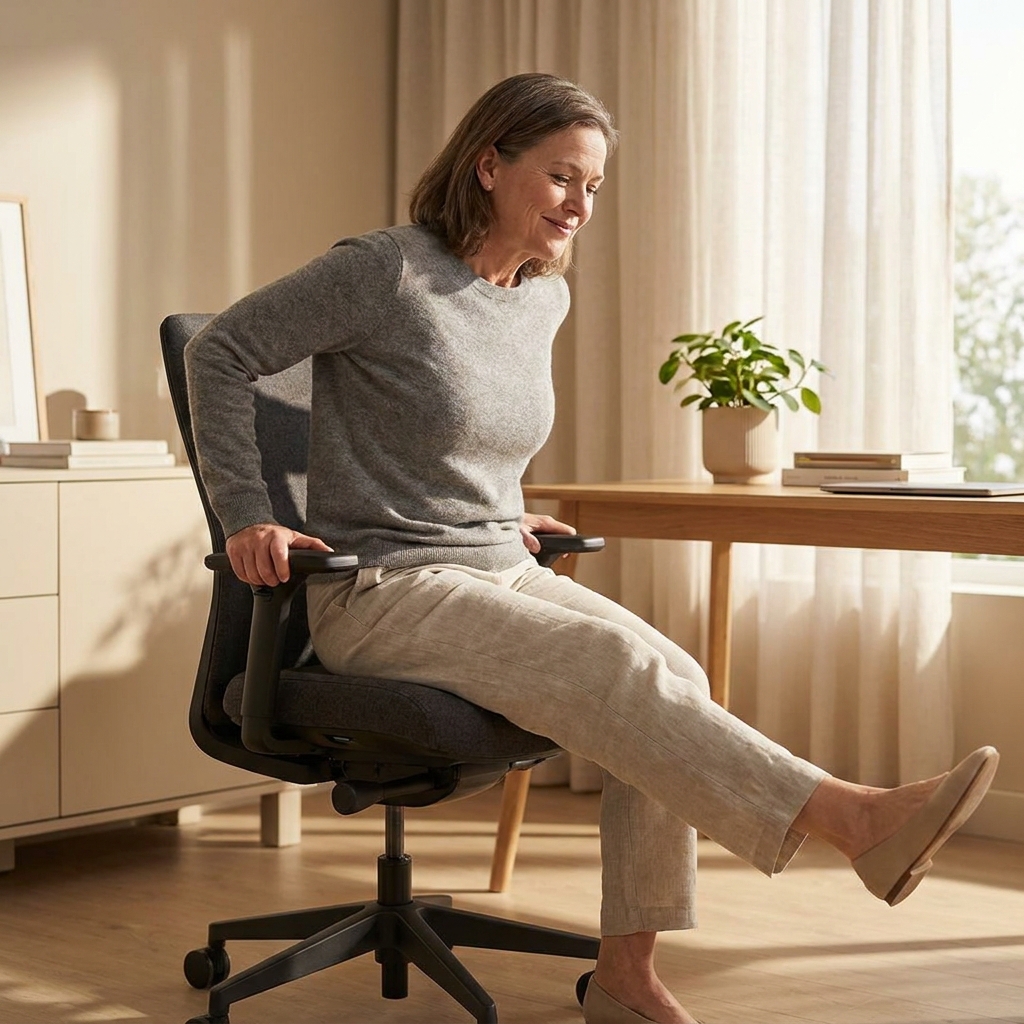
- Straighten each knee a few times while still seated.
- Rise slowly, then walk at an easy pace for the first minute or two.
- Save more demanding activity until the joint has warmed up.
When Conservative Care Isn’t Enough: Regenerative Treatment Options
Regenerative options are typically considered for early-to-moderate PFPS or OA that has not responded adequately to movement habits, hip-inclusive strengthening, and a structured course of physical therapy.
- Viscosupplementation (hyaluronic acid injections): Directly addresses the lubrication deficit described earlier by supplementing the joint’s natural fluid, supporting smoother motion and reducing friction-related pain.
- PRP (platelet-rich plasma): Uses concentrated platelets from the patient’s own blood to support tissue healing and help modulate inflammation in degenerative joint tissue.
- BMAC (bone marrow aspirate concentrate): A more intensive option using the patient’s own bone marrow cells, often considered for more advanced degenerative changes.
These treatments sit within a broader non-surgical continuum. Studies suggest that up to 80% of patients told they need total knee replacement may not actually require surgery. Research activity is also expanding, with 224 clinical trials worldwide investigating stem cell therapies for osteoarthritis and a major Phase III trial, funded with $140 million, announced in January 2026.
Precision matters. Imaging-guided injections using ultrasound or X-ray improve accuracy in delivering treatment to the target tissue, an important factor when evaluating providers.
Regulatory transparency. As of 2026, the FDA has not approved stem cell, PRP, or exosome products specifically for orthopedic conditions. Substantial clinical evidence supports their safety and efficacy when administered by qualified providers within FDA regulatory frameworks. Patients are best served by domestic, regulated care rather than overseas medical tourism.
Personalization. The right choice depends on inflammation levels, age, injury specifics, current medications, and prior treatment response. A professional evaluation determines which modality, or combination, fits.
If the Rule Points to Inflammatory Arthritis: Next Steps
When the self-check suggests an inflammatory pattern, the next step is medical evaluation: bloodwork for inflammatory markers, possible imaging, and a primary care or rheumatology referral.
Regenerative orthopedic treatments such as PRP, BMAC, and viscosupplementation are not appropriate first steps for active inflammatory arthritis. The underlying condition needs to be diagnosed and medically managed first.
The 30-minute rule is a triage tool that helps gauge urgency. It is not a substitute for a clinical diagnosis.
Quick Reference: Mechanical vs. Inflammatory Self-Check
| Feature | Mechanical (PFPS / Early-Moderate OA) | Possibly Inflammatory |
|---|---|---|
| Stiffness duration after sitting | Under 30 minutes, often a few minutes | Longer than 30 to 60 minutes |
| Response to movement | Loosens quickly with walking | Slow to ease; may persist or flare |
| Typical trigger | Sitting or rest with bent knees | Present broadly, not just after sitting |
| Associated signs | None or mild | Swelling, warmth, multiple joints, fatigue, fever |
| Likely next step | Habit changes, exercise, physical therapy | Medical workup and possible rheumatology referral |
This table reflects rheumatologic literature that distinguishes noninflammatory and inflammatory stiffness patterns. It is a self-triage aid, not a replacement for professional evaluation.
Conclusion: Turning a Confusing Symptom Into a Clear Signal
Knee pain after sitting with bent legs is not random. It reflects synovial fluid thickening during stillness and the cartilage-loading shift that occurs when a flexed knee straightens under body weight.
The 30-Minute Gel-Phenomenon Rule replaces a vague “wait and see” approach with a measurable check. Most cases fall into the mechanical category and respond well to movement breaks, hip-inclusive strengthening, and aerobic activity, with regenerative options available when progress stalls. Stiffness that persists beyond 30 to 60 minutes, or that comes with swelling, warmth, or systemic symptoms, deserves professional evaluation rather than continued self-management.
Next Step: Get a Professional Evaluation of Your Knee Pain Pattern
For people whose self-check points to a mechanical pattern that has not improved with conservative care, a personalized evaluation is a more reliable path than guessing at next steps.
Unicorn Bioscience is a regenerative orthopedic provider with locations in Austin, Dallas, El Paso, Fort Worth, Houston, San Antonio, Boca Raton, and Manhattan. The clinic offers precision imaging-guided PRP, viscosupplementation, BMAC, and related cellular therapies as non-surgical options for PFPS and early-to-moderate osteoarthritis. Treatment plans account for individual factors such as inflammation levels, age, injury history, current medications, and personal goals, and qualified candidates may receive treatment on the same day as their consultation.
Both virtual and in-person consultations are available. Readers who have tried the conservative measures in this article and still experience post-sitting knee pain can call (737) 347-0446 or visit unicornbioscience.com to schedule a consultation and find out whether their knee pain pattern makes them a candidate for regenerative, non-surgical treatment.
Schedule Your Consultation Today!