Regenerative Orthopedics Dallas TX: The LBJ Freeway Clinic Guide for 2026 Patients
Regenerative Orthopedics Dallas TX: The LBJ Freeway Clinic Guide for 2026 Patients
The Dallas-Fort Worth metroplex stretches across 9,286 square miles, home to over 6.7 million residents navigating one of America’s fastest-growing healthcare markets. For the hundreds of thousands of DFW residents living with joint pain, the default path has long led to surgical consultation. Yet emerging evidence suggests this approach may not serve every patient’s best interests.
Consider this: over 600,000 knee replacements are performed annually in the United States. Research indicates that up to 80% of patients told they need total knee replacement may not actually require surgery. This gap between surgical recommendations and actual necessity creates an opportunity for informed patients to explore alternatives.
This guide provides a structured, locally grounded framework to help Dallas patients evaluate regenerative orthopedic providers in 2026. It examines what distinguishes a dedicated regenerative specialist from a general surgical practice, with particular attention to Unicorn Bioscience’s Dallas location at 6200 Lyndon B Johnson Fwy Suite 180. The content that follows is designed for patients actively researching non-surgical alternatives, offering education rather than promotion.
Why Dallas Is One of America’s Most Important Regenerative Orthopedics Markets in 2026
The DFW metro population reached 6,732,000 in 2025, growing at 2.2% year-over-year according to MacroTrends data. This makes Dallas one of the fastest-growing healthcare markets in the nation. The Federal Reserve Bank of Dallas reports that DFW added 180,000 residents from July 2023 to July 2024 alone, sustaining long-term demand for orthopedic and regenerative care.
Dallas’s aging demographic compounds this demand. Approximately 154,291 seniors aged 65 and older currently reside in the city, a population segment with disproportionately high rates of knee, hip, and hand osteoarthritis. Nationally, 32.5 million U.S. adults live with clinical osteoarthritis. In adults 45 and older, up to 30% have knee osteoarthritis. This translates to hundreds of thousands of potential patients in DFW alone.
The global orthopedic regenerative medicine market is valued at approximately $4.78 billion in 2026 and is projected to reach $5.84 billion by 2031 according to Mordor Intelligence. North America commands approximately 42 to 45 percent of global market share, positioning high-growth metros like Dallas at the center of commercial activity.
Dallas also benefits from academic credibility. UT Southwestern Medical Center’s Hamon Center for Regenerative Science and Medicine places DFW at the forefront of regenerative research, a proximity signal that elevates patient trust in local providers.
Understanding Regenerative Orthopedics: What Dallas Patients Need to Know in 2026
Regenerative orthopedics encompasses a category of non-surgical, minimally invasive treatments that use the body’s own biological mechanisms, or lab-processed biological agents, to repair damaged joints, tendons, ligaments, and cartilage.
The distinction from traditional orthopedic surgery is significant: no general anesthesia, no hospital stay, substantially shorter recovery timelines, and same-day treatment availability at specialized clinics. Injectable regenerative approaches now account for nearly 60% of treatments in outpatient settings, surpassing surgical procedures according to Verified Market Reports.
The 2026 evidence landscape shows momentum. Currently, 224 active global clinical trials are investigating stem cell therapies for osteoarthritis, including a $140 million MEDIPOST Phase III trial announced in January 2026. Results are expected by 2028 to 2029, signaling a rapidly maturing evidence base.
Regarding regulatory context: as of 2026, the FDA has not approved stem cell, PRP, or exosome products specifically for orthopedic conditions. However, substantial clinical evidence supports safety and efficacy when these treatments are administered by qualified providers within FDA regulatory frameworks.
The Core Treatment Modalities: A Dallas Patient’s Reference Guide
PRP (Platelet-Rich Plasma) is derived from the patient’s own blood. Concentrated platelets release growth factors that accelerate tissue repair. This modality is growing at a CAGR of 12.1% within the orthopedic regenerative market. A 2025 network meta-analysis published in Frontiers in Medicine found ultrasound-guided PRP is emerging as a preferred strategy for early-to-mid stage knee osteoarthritis.
Stem Cell Therapy (MSC) utilizes mesenchymal stem cells sourced from bone marrow or adipose tissue to promote tissue regeneration and reduce inflammation. Cell-based matrices post the highest forecast CAGR of 7.88% through 2031 in the orthopedic regenerative market.
BMAC (Bone Marrow Aspiration Concentrate) involves concentrated bone marrow cells used for regenerative repair. As an autologous treatment (derived from the patient’s own body), it reduces rejection risk. Learn more about bone marrow stem cell concentration and how this process works in clinical practice.
Exosome Therapy employs extracellular vesicles that facilitate cellular communication and regeneration. This newer modality remains unavailable at many Dallas competitors.
Hyaluronic Acid Injections (Viscosupplementation) lubricate and cushion joints, proving particularly effective for early-to-mid stage osteoarthritis.
Peptide Therapy involves targeted peptide treatments for tissue repair and regeneration, serving as an emerging adjunct modality.
The most effective 2026 protocols combine multiple modalities tailored to the individual patient rather than relying on a single, one-size-fits-all injection.
Why Precision-Guided Injection Technology Changes Outcomes
The difference between landmark-based injections (traditional, freehand) and image-guided injections (ultrasound or fluoroscopic guidance) produces measurable clinical outcomes.
A 2025 pilot study published in PMC found that fluoroscopically guided injections yielded 75% or greater pain relief, compared to 40 to 75% variable outcomes for landmark-based methods. The Frontiers in Medicine network meta-analysis confirmed that real-time visual localization via ultrasound enables precise delivery of PRP into the joint cavity, improving efficacy for knee osteoarthritis.
In practice, ultrasound-guided knee injection means the clinician visualizes the needle in real time, confirming placement before injecting. This reduces misplacement risk and improves therapeutic agent delivery. When evaluating a Dallas regenerative orthopedic provider, patients should ask specifically whether injections are performed under ultrasound or X-ray guidance.
The Dallas Provider Evaluation Framework: 6 Criteria for Choosing a Regenerative Orthopedics Specialist
This framework serves as a structured decision-making tool specifically designed for Dallas patients navigating a competitive and geographically sprawling clinic landscape.
Criterion 1: Specialization vs. Surgical Default
A fundamental difference exists between a surgical orthopedic group that offers PRP as an add-on service and a clinic where regenerative medicine is the core identity and primary offering.
Surgical-first practices may default to recommending surgery because it represents their primary revenue model. Regenerative specialists are incentivized to optimize non-surgical outcomes. The statistic bears repeating: up to 80% of patients told they need total knee replacement may not actually require surgery. Patients exploring regenerative medicine alternatives to knee replacement are increasingly finding that non-surgical pathways can deliver meaningful outcomes.
Key question for patients: “Is regenerative medicine your primary practice, or one of many services you offer?”
Criterion 2: Treatment Menu Breadth and Personalization
Single-modality clinics (PRP only, or stem cells only) cannot tailor treatment to the individual patient’s condition severity, age, inflammation levels, and health goals.
A comprehensive 2026 regenerative orthopedic practice should offer at minimum: PRP, BMAC or stem cells, exosomes, and hyaluronic acid, with the ability to combine modalities. Most Dallas competitors do not prominently feature exosome therapy, making it a meaningful differentiator. Understanding the difference between PRP and stem cell therapy can help patients ask more informed questions during their consultation.
Personalized treatment planning should account for inflammation levels, patient age, injury type and location, current medications, and personal health goals.
Key question: “Will you create a personalized treatment plan for my specific condition, or do you use a standard protocol for all patients?”
Criterion 3: Precision-Guided Injection Capability
Not all Dallas clinics use ultrasound or fluoroscopic guidance for every injection. This represents a critical quality differentiator that patients should verify before booking.
Precision guidance is especially important for deep joints (hip, shoulder, spine) where freehand injection accuracy is significantly lower. Image guidance reduces the risk of misplacement, nerve injury, and ineffective treatment.
Key question: “Do you use ultrasound or X-ray guidance for all injections, or only for certain procedures?”
Criterion 4: Geographic Accessibility Across the DFW Metroplex
Dallas’s sprawling geography creates real barriers to care. A clinic in Frisco may be 45 minutes or more from a patient in Oak Cliff or Irving during peak traffic.
Multi-location regenerative medicine clinic networks with DFW coverage reduce the access burden, particularly for patients who require multiple treatment sessions over weeks or months. Same-day treatment availability eliminates additional trips across the metroplex. Virtual consultation options further reduce the geographic barrier for initial evaluation.
Key question: “How many DFW locations do you operate, and do you offer same-day treatment for qualified patients?”
Criterion 5: FDA Regulatory Transparency and U.S.-Based Treatment
Some patients, frustrated by high out-of-pocket costs or limited local options, consider medical tourism for stem cell therapy. This practice carries significant safety and regulatory risks.
U.S.-based treatment within FDA regulatory frameworks provides oversight, accountability, and recourse that overseas clinics cannot offer. Providers who are transparent about the current FDA status of regenerative treatments demonstrate integrity, versus those who make unsubstantiated approval claims. Patients can review the current landscape of FDA-approved stem cell therapy for orthopedic conditions to better understand what is and isn’t sanctioned under current guidelines.
Texas has joined Utah and Florida in loosening state-level restrictions on stem cell therapies, signaling a favorable regulatory environment for regenerative orthopedic providers in Dallas.
Key question: “Can you explain the current FDA regulatory status of the treatments you offer, and how your practice complies with those frameworks?”
Criterion 6: Outcomes Data and Clinical Credibility
Patients should ask providers for their own outcomes data: what percentage of their patients avoid surgery after treatment, and what is their patient satisfaction rate?
Unicorn Bioscience reports that more than 90% of stem cell patients have not gone on to knee replacement surgery, a meaningful outcomes claim. Physician credentials matter as well: board certification, training at recognized institutions, and specific experience in regenerative orthopedics.
Key question: “What are your outcomes data for patients with my condition, and what percentage of your patients avoid surgery after treatment?”
The Dallas Regenerative Orthopedics Competitive Landscape: How Providers Compare
The Dallas regenerative orthopedics market includes several provider categories: dedicated regenerative specialists, surgical practices with regenerative add-ons, franchise-based regenerative brands, and single-modality clinics.
Most Dallas competitors focus on PRP or stem cells exclusively. Few offer the full spectrum of PRP, BMAC, exosomes, hyaluronic acid, and peptides. Common competitor gaps include limited multi-location DFW footprint, no same-day treatment emphasis, absence of exosome therapy, limited precision-guided injection capability, and lack of transparent FDA regulatory communication.
Unicorn Bioscience positions itself as a dedicated regenerative orthopedic medicine Texas specialist with eight locations across Texas, Florida, and New York. Its differentiators include a comprehensive multi-modality treatment menu featuring exosomes, precision-guided injection technology, same-day treatment capability, and transparent FDA compliance messaging.
Unicorn Bioscience at the LBJ Freeway: Dallas’s Precision-Guided Regenerative Orthopedics Specialist
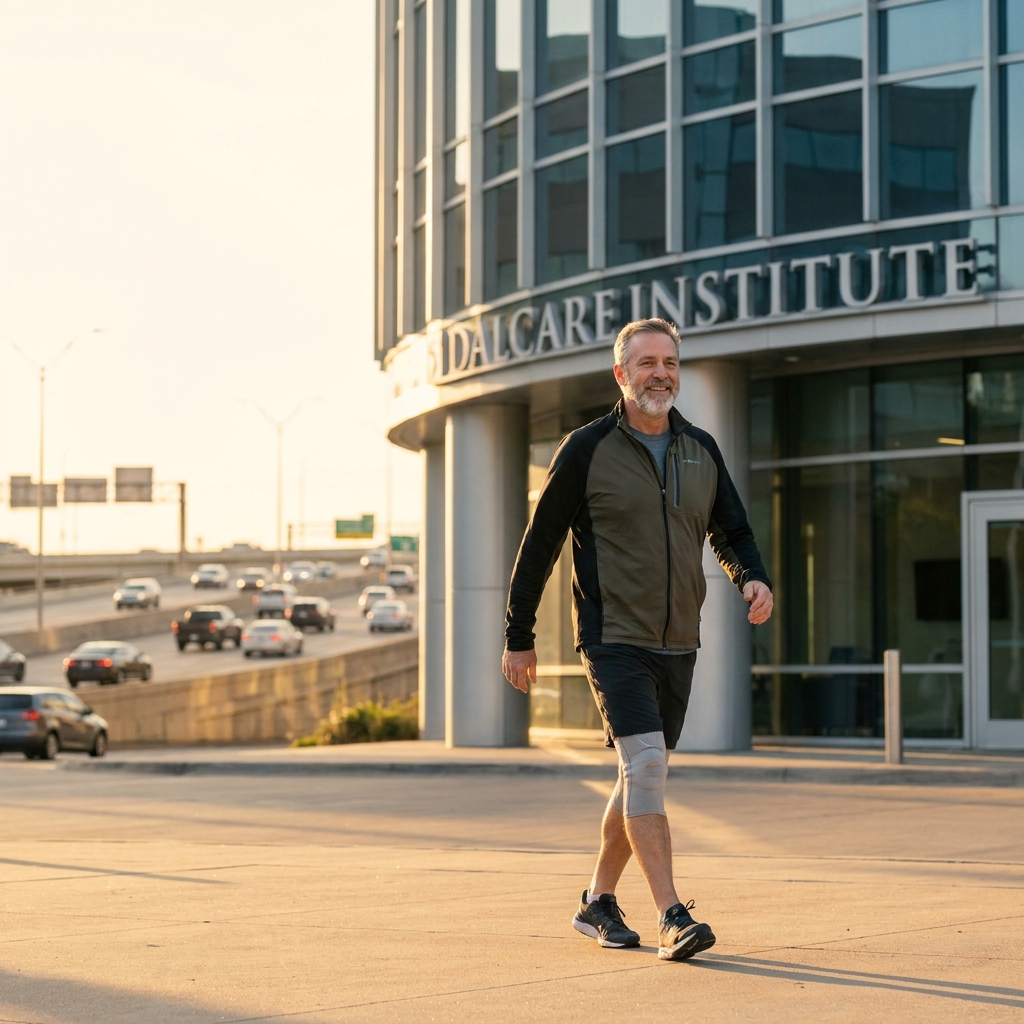
Unicorn Bioscience’s Dallas location at 6200 Lyndon B Johnson Fwy Suite 180, Dallas, TX 75240 sits centrally along the LBJ Freeway (I-635) corridor for accessibility from across the DFW metroplex.
The clinic operates as a dedicated regenerative orthopedics practice where regenerative medicine is the primary offering rather than a surgical add-on. The multi-location network addresses the geographic access challenge unique to the sprawling DFW market.
The same-day treatment model allows qualified patients to receive injection treatment on the day of consultation. Virtual consultation availability reduces the barrier to first contact for patients across the metroplex.
Unicorn Bioscience’s Multi-Modality Treatment Approach
The treatment menu includes stem cell therapy (MSC), PRP, BMAC, exosome therapy, hyaluronic acid injections, and peptide therapy. This represents one of the most comprehensive menus among Dallas regenerative orthopedic providers.
Treatment protocols are developed based on inflammation levels, patient age, injury type and location, current medications, and personal health goals. Conditions treated include osteoarthritis (knee, hip, hand), rotator cuff injuries, meniscus tear treatment without surgery, tendon and ligament tears, plantar fasciitis, spine and disc conditions, and more.
Precision-Guided Injection Technology at Unicorn Bioscience
Unicorn Bioscience uses both ultrasound and X-ray (fluoroscopic) guidance for all injection procedures. This dual-imaging capability exceeds the standard of many Dallas competitors.
Every injection is confirmed in real time before delivery, ensuring therapeutic agents reach the intended target tissue. Precision guidance is standard for all body regions treated, including shoulder, knee, hip, spine, and ankle.
Clinical Team and Credentials
Dr. Aldaas (CEO and Founder) is a board-certified physician with over a decade of hospital medicine experience. He completed his medical degree from St. Matthew’s University School of Medicine and residency in Family Medicine at Ellis Hospital, later serving as Assistant Professor of Medicine at Albany Medical Center.
Josh Simpson, MS-PAC (Technical Manager) trained in orthopedic surgery at Johns Hopkins and gained experience at a leading orthopedic institution in orthopedic trauma. These credentials represent prestigious training backgrounds in orthopedic care.
Navigating the Cost and Insurance Reality for Dallas Regenerative Orthopedic Patients
Most major insurers, including Blue Cross Blue Shield, Cigna, Aetna, and United Healthcare, classify PRP and stem cell injections as “experimental” or “investigational” for orthopedic conditions as of 2026. Patients typically pay out-of-pocket.
The Cigna coverage policy effective December 2025 confirms stem cell injections for orthopedic conditions remain experimental or investigational. Patients should not expect insurance coverage to change in the near term.
Cost benchmarks for 2026: PRP sessions typically range from $500 to $2,500 per session. Stem cell therapy ranges from $3,000 to $7,500. Total knee replacement surgery costs $30,000 to $50,000 or more, including facility, anesthesia, and rehabilitation. Regenerative treatments represent a fraction of that cost if they successfully defer or eliminate surgery. Patients researching new injection instead of knee replacement options will find that the cost comparison strongly favors exploring non-surgical alternatives first.
Patients should ask providers about financing options, payment plans, and package pricing for multi-session protocols. Cost transparency serves as a trust signal: providers who proactively discuss cost realities demonstrate patient-centered values.
What to Expect at the First Consultation at Unicorn Bioscience Dallas
The consultation process follows a structured path designed to reduce anxiety and set clear expectations.
Initial contact offers virtual or in-person consultation options. Regenerative medicine consultation online allows patients from across the DFW metroplex to begin the evaluation process without commuting.
Medical history and imaging review involves the clinical team reviewing prior imaging (MRI, X-ray), medical history, current medications, and health goals to assess candidacy.
Personalized treatment plan development occurs if the patient is a candidate. A customized protocol is developed based on inflammation levels, injury type, age, and goals.
Same-day treatment option allows qualified patients to receive their first injection treatment on the day of consultation, eliminating the need for a second visit.
Follow-up and monitoring tracks outcomes over time, with treatment protocols adjusted based on patient response.
The process is transparent: the team explains the FDA regulatory context, realistic outcome expectations, and cost structure before any treatment begins.
The Future of Regenerative Orthopedics in Dallas: What 2026 and Beyond Looks Like
The $140 million MEDIPOST Phase III clinical trial announced in January 2026 will likely accelerate FDA regulatory movement on stem cell therapies for orthopedic conditions when results arrive by 2028 to 2029.
The broader regenerative medicine market is projected to grow from $58.40 billion in 2026 to $360.84 billion by 2034 at a 25.56% CAGR according to Fortune Business Insights. The orthopedics segment holds the largest application share.
Texas’s favorable regulatory environment positions Dallas-based providers well. As UT Southwestern’s Hamon Center grows Dallas’s academic regenerative research infrastructure, local patients benefit from proximity to cutting-edge science. Patients seeking non-surgical treatment for osteoarthritis in 2026 will find an increasingly robust evidence base supporting regenerative approaches.
Conclusion: Choosing the Right Regenerative Orthopedics Partner in Dallas for 2026
The six-criteria evaluation framework offers Dallas patients a structured approach: specialization vs. surgical default, treatment menu breadth, precision-guided injection capability, geographic accessibility, FDA regulatory transparency, and outcomes data.
Dallas patients deserve a provider whose primary identity is regenerative orthopedics rather than a surgical practice offering regenerative treatments as a secondary service. DFW’s rapid population growth, aging demographics, and sprawling geography make provider selection especially consequential.
With 224 active clinical trials, a $140 million Phase III study underway, and a favorable Texas regulatory environment, 2026 represents an optimal time for Dallas patients to explore regenerative alternatives to surgery.
Unicorn Bioscience meets all six criteria: dedicated regenerative specialist, comprehensive multi-modality menu including exosomes, precision ultrasound and X-ray guidance, multiple locations with same-day treatment, transparent FDA compliance, and strong reported outcomes with more than 90% of stem cell patients avoiding knee replacement.
Patients who ask the right questions, understand the evidence, and choose a qualified specialist are the ones most likely to achieve meaningful, lasting relief without surgery.
Ready to Explore Regenerative Orthopedics in Dallas? Schedule a Consultation at Unicorn Bioscience
Patients interested in exploring regenerative orthopedics can schedule a consultation, virtual or in-person, at Unicorn Bioscience’s Dallas location at 6200 Lyndon B Johnson Fwy Suite 180, Dallas, TX 75240.
Qualified patients may receive treatment on the day of their consultation, eliminating lengthy wait times or multiple appointments. Contact the clinic at (737) 347-0446 or visit unicornbioscience.com.
Virtual consultations are available for patients who prefer to begin the process remotely or who are located in other parts of the DFW metroplex. The initial consultation is an evaluation, not a commitment. Patients receive an honest assessment of their candidacy and a transparent discussion of expected outcomes and costs.
In addition to the Dallas LBJ Freeway location, Unicorn Bioscience operates additional locations across Texas, Florida, and New York for patient convenience.
Schedule Your Consultation Today!