
Tibialis Posterior Tendonitis Treatment: The Tenosynovitis-vs-Tendinosis Split That Changes Everything About Your Protocol
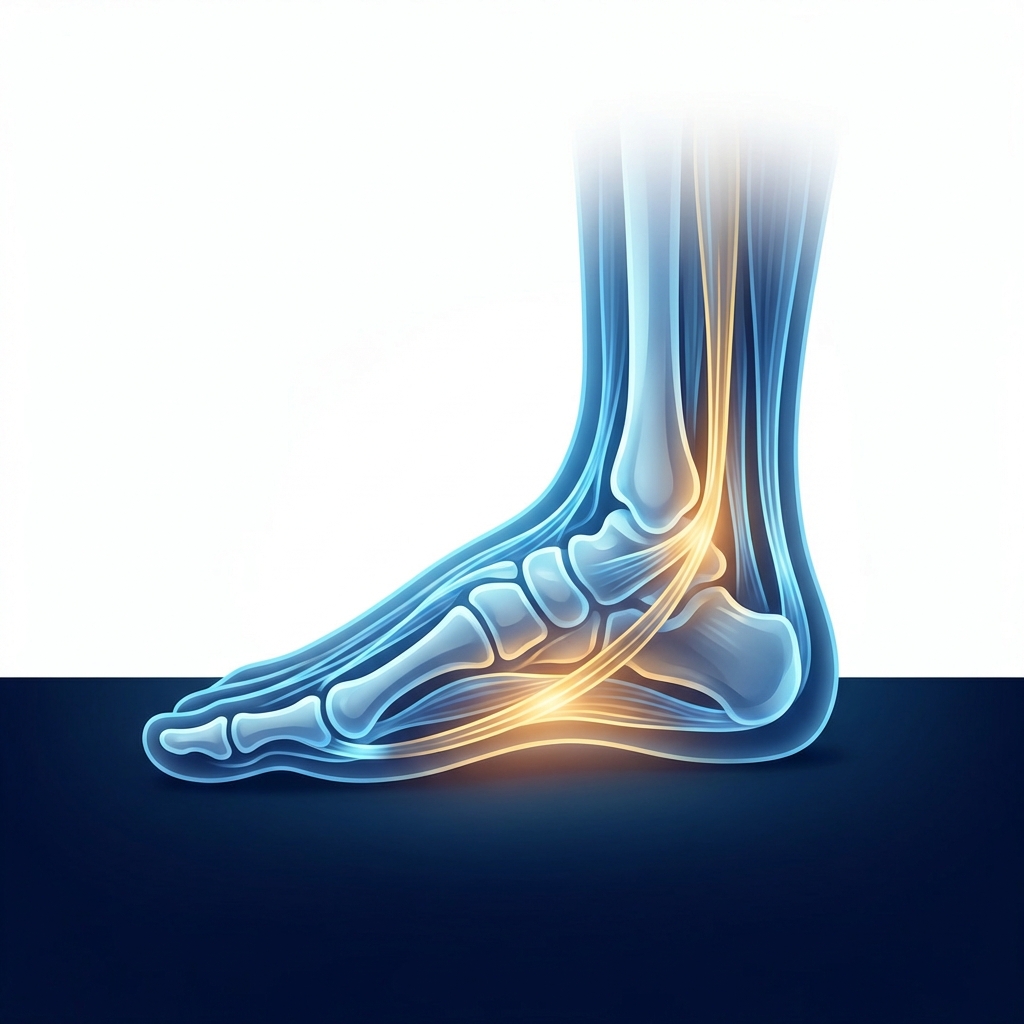
Tibialis Posterior Tendonitis Treatment: The Tenosynovitis-vs-Tendinosis Split That Changes Everything About Your Protocol
Introduction: Why Your Tibialis Posterior Tendonitis Treatment May Not Be Working
Millions of patients follow standard tibialis posterior tendonitis treatment protocols and plateau. The treatments are not necessarily wrong; they are simply being applied to the wrong diagnosis. This disconnect between intervention and underlying pathology represents one of the most significant barriers to successful outcomes in foot and ankle rehabilitation.
The term “tibialis posterior tendonitis” functions as an umbrella diagnosis that actually encompasses two fundamentally different pathologies: tenosynovitis and tendinosis. Each condition requires a distinct treatment protocol, and conflating them leads to frustration, wasted time, and progressive deterioration.
This distinction matters because tibialis posterior tendinopathy, now formally referred to as Progressive Collapsing Foot Deformity (PCFD) in updated clinical literature, is the leading cause of adult-acquired flatfoot deformity. Prevalence estimates range from 3.3% to 10% in middle-aged women, and the condition remains significantly underdiagnosed despite characteristic and prolonged symptoms.
This article examines the tenosynovitis versus tendinosis diagnostic split, how it maps onto the four-stage PTTD/PCFD classification system, the 2026 randomized controlled trial evidence on ultrasound-guided percutaneous electrolysis, and where regenerative biologics enter the treatment sequence when conservative care has been exhausted. The goal is to help patients and caregivers understand why stage-matched, diagnosis-specific protocols matter and how to have more informed conversations with their providers.
The Diagnostic Split That Changes Everything: Tenosynovitis vs. Tendinosis
Both tenosynovitis and tendinosis share similar symptoms: medial ankle pain, swelling, and difficulty walking. However, they represent entirely different biological processes requiring different interventions. Conflating these two conditions is one of the primary reasons patients plateau on conservative care.
Tibialis Posterior Tenosynovitis: Acute Inflammation of the Tendon Sheath
Tenosynovitis refers to inflammation of the synovial sheath surrounding the tendon, not the tendon structure itself. In this condition, the tendon remains structurally intact while the sheath becomes irritated and inflamed, producing excess synovial fluid and causing pain and swelling along the medial ankle and behind the medial malleolus.
The typical clinical presentation includes acute or subacute onset, localized tenderness along the tendon sheath, pain with activity, possible warmth and swelling, and a single-leg heel raise that may be painful but remains achievable. Tenosynovitis corresponds to Stage I in the Johnson and Strom classification (modified by Myerson), where the tendon is inflamed but the arch and hindfoot alignment remain normal.
The key treatment implication: tenosynovitis responds to anti-inflammatory strategies. NSAIDs, activity modification, short-term immobilization in a walking boot for three to four weeks, ice, and relative rest form the foundation of care. The goal is to calm the sheath without loading a structurally compromised tendon.
Tibialis Posterior Tendinosis: Chronic Collagen Degeneration Without Inflammation
Tendinosis represents a fundamentally different process: a degenerative condition characterized by disorganized collagen fibers, angiofibroblastic hyperplasia, and absence of significant inflammatory cells. This is not an inflammatory condition, which explains why anti-inflammatory treatments such as NSAIDs and corticosteroids are largely ineffective and may even impair healing by suppressing the limited reparative response the tendon can mount.
The typical clinical picture involves chronic, insidious onset with pain that is diffuse rather than sharply localized. The tendon may feel thickened or nodular, progressive loss of arch height becomes apparent, and the single-leg heel raise becomes increasingly difficult or impossible. Tendinosis underlies the structural failure seen as the condition progresses to flexible flatfoot (Stage II) and rigid flatfoot (Stage III) deformity.
Treatment for tendinosis requires mechanical loading strategies. Eccentric and concentric progressive resistive exercises stimulate collagen remodeling, combined with orthotic support to offload the degenerating tendon. Rest alone does not reverse degeneration.
According to the Cleveland Clinic, posterior tibial tendonitis that persists too long begins to break down and weaken the tendon (tendinosis), which drives PTTD progression. This underscores why early accurate diagnosis is critical.
Why the Medial Malleolus Wrap Zone Complicates Both Conditions
The posterior tibial tendon wraps around the medial malleolus through a zone of relative avascularity. This region has significantly reduced blood supply compared to the rest of the tendon, meaning reduced delivery of healing nutrients, growth factors, and reparative cells.
Patients and clinicians should expect four to six weeks for mild tenosynovitis and up to four months for more persistent tendinosis. Rushing return to activity before the tendon has adapted leads to recurrence. This hypovascularity also explains why standard conservative care has a biological ceiling and why adjunctive and regenerative therapies become relevant when standard protocols stall.
The 4-Stage PTTD/PCFD Classification: Matching Protocol to Stage
The Johnson and Strom classification system (modified by Myerson) provides the clinical framework for staging the condition and selecting treatment. The diagnostic split between tenosynovitis and tendinosis maps directly onto this staging system and should drive protocol selection at each stage.
Stage I: Tenosynovitis With Intact Tendon and Normal Arch
Stage I presents with pain and swelling along the medial ankle with tendon sheath inflammation, but the tendon remains structurally intact and the hindfoot and arch maintain normal alignment. The single-leg heel raise is painful but typically achievable, no visible flatfoot deformity exists, and the “too many toes” sign is absent or minimal.
First-line treatment includes activity modification, NSAIDs for sheath inflammation, and short-term immobilization in a walking boot for three to four weeks, followed by transition to a custom orthotic or medial arch support. Once acute inflammation subsides, gentle posterior tibialis activation should begin, progressing to eccentric and concentric strengthening.
A landmark randomized controlled trial by Kulig et al. (2009) found that orthoses combined with stretching and progressive resistive exercises significantly reduced pain and improved function in Stage I and II patients over 12 weeks. Alvarez et al. (2006) reported an 83% success rate with orthotics and structured strengthening, with only 11% eventually requiring surgery.
Stage II: Flexible Flatfoot Deformity and Tendinosis
In Stage II, the tendon has begun to degenerate (tendinosis), the medial longitudinal arch has collapsed, and a flexible flatfoot deformity is present. However, the hindfoot can still be passively corrected. The “too many toes” sign becomes visible from behind, the single-leg heel raise is significantly impaired or impossible, and hindfoot valgus is present but correctable.
Because tendinosis is now the dominant pathology, anti-inflammatory strategies are deprioritized. The protocol shifts to mechanical loading, orthotic correction, and progressive strengthening. Custom ankle-foot orthoses (AFO) or University of California Biomechanics Laboratory (UCBL) orthoses help control hindfoot valgus and offload the degenerating tendon.
Exercise protocols should include eccentric and concentric progressive resistive exercises targeting the posterior tibialis, with secondary emphasis on peroneals, gastrocnemius length and strength, foot intrinsics, and proximal hip stability. Addressing glute weakness and hip abductor deficits that contribute to knee valgus and downstream excessive pronation represents a frequently overlooked component of Stage II management.
Stage II is the critical decision point. Patients who fail three to six months of structured conservative care may become candidates for surgical intervention.
Stage III: Rigid Flatfoot Deformity
In Stage III, the flatfoot deformity has become rigid and the hindfoot cannot be passively corrected. Significant degenerative changes may be present in the subtalar and midfoot joints.
Conservative care remains relevant for symptom management in patients who are not surgical candidates, including elderly patients, those with medical complexity, or those who decline surgery. Bracing with a rigid AFO can reduce pain and slow progression. Surgical planning at Stage III typically requires bony reconstruction, including medial slide calcaneal osteotomy, lateral column lengthening, and/or arthrodesis in addition to tendon procedures.
Stage IV: Ankle Valgus and Risk of Ankle Arthritis
Stage IV represents the most advanced and debilitating presentation, with deformity extending to the ankle joint, ankle valgus, and risk of tibiotalar arthritis. Conservative care at this stage is palliative, with pain management and functional preservation as primary goals while surgical planning proceeds. Surgical options include pantalar arthrodesis or total ankle replacement in addition to hindfoot reconstruction.
Early diagnosis and intervention prevent progression to Stages III and IV, reinforcing the importance of accurate early diagnosis.
Diagnosing the Split: How to Tell Tenosynovitis From Tendinosis Clinically
Accurate diagnosis of the tenosynovitis versus tendinosis split forms the foundation of correct protocol selection. Clinical examination combined with imaging is required.
Key Clinical Tests
The single-leg heel raise test is the most reliable clinical test for tibialis posterior tendinopathy. Inability to perform or pain during the test represents a key positive finding. Tenosynovitis patients may still achieve the raise with pain, while tendinosis patients often cannot.
The “too many toes” sign, viewed from behind, indicates more than one or two toes visible lateral to the heel, suggesting hindfoot valgus and arch collapse consistent with Stage II or beyond. Palpation along the tendon reveals that tenosynovitis produces tenderness along the sheath (diffuse, proximal to and around the medial malleolus), while tendinosis may produce a palpable nodule or thickening within the tendon body.
PTTD shares symptoms with medial tibial stress syndrome, tarsal tunnel syndrome, and spring ligament injuries. Careful clinical examination is required to avoid misdiagnosis.
Imaging: MRI, Ultrasound, and Weight-Bearing CT
MRI remains the gold standard for assessing soft tissue condition and can differentiate tenosynovitis (sheath fluid, intact tendon) from tendinosis (intratendinous signal change, fiber disruption, thickening) while identifying partial or complete tears.
Diagnostic ultrasound is useful for dynamic assessment and can guide injections. It identifies sheath effusion (tenosynovitis) versus intratendinous degeneration (tendinosis) in real time.
Weight-bearing CT (WBCT) is superior to standard CT and X-ray for assessing the degree of deformity under load. According to StatPearls, this modality demonstrates excellent inter-rater reliability and is increasingly used in surgical planning for Stage II through IV.
For most Stage I presentations, clinical examination alone may be sufficient. MRI is recommended when the diagnosis is unclear, when a tear is suspected, or when conservative care has failed.
Stage-Matched Treatment Protocols: A Practical Framework
The protocol is not linear. It is determined by both the stage (I through IV) and the dominant pathology (tenosynovitis versus tendinosis) at that stage.
Phase 1: Acute Management (Tenosynovitis-Dominant, Stage I)
The goal is to reduce sheath inflammation, protect the tendon from further injury, and prevent progression to tendinosis. Interventions include relative rest, ice, NSAIDs (short course), walking boot immobilization for three to four weeks, and elevation for swelling management.
Transition criteria include pain reduction to a manageable level and resolution of acute swelling, typically within two to four weeks. Corticosteroid injections directly into the tendon sheath should be avoided due to risk of tendon weakening and rupture, particularly in the hypovascular wrap zone. Orthotic fitting should begin during this phase to prepare for the loading phase.
Phase 2: Loading and Strengthening (Tendinosis-Dominant, Stages I–II)
The goal is to stimulate collagen remodeling through progressive mechanical loading, restore posterior tibialis strength and endurance, and correct biomechanical contributors.
Core exercises include eccentric and concentric posterior tibialis strengthening (heel raises on a step, resisted inversion), progressing from bilateral to single-leg as tolerated. Secondary targets include peroneal strengthening, gastrocnemius stretching, foot intrinsic activation, and proximal hip and glute strengthening to reduce downstream pronation forces.
Custom orthotics or AFO should be worn during all weight-bearing activity to offload the tendon while the loading program progresses. Eight to twelve weeks of structured progressive loading is the minimum for tendinosis.
Phase 3: When Standard Conservative Care Plateaus
A plateau is defined as a patient who has completed eight to twelve weeks of structured Phase 1 and Phase 2 care without achieving functional goals.
A landmark 2026 randomized clinical trial published in The Journal of Pain found that adding ultrasound-guided percutaneous electrolysis (PE) to manual therapy and exercise was significantly more effective for improving pain and disability in tibialis posterior tendinopathy than manual therapy and exercise alone at both short-term and mid-term follow-ups.
Research showed that radial shockwave therapy (ESWT) combined with foot core progression exercises achieved clinically important improvements in 90% of patients for activities of daily living and 80% for sport function in patients who had failed standard conservative treatment.
Prolotherapy and needle tenotomy represent emerging second-line options with limited but growing evidence for foot and ankle tendinopathies per AAFP (2022). These interventions are most appropriate for Stage I through II tendinosis that has not responded to Phase 2 loading. Patients exploring all available chronic tendonitis treatment options at this stage will find that the evidence base for adjunct therapies has expanded considerably in recent years.
The 2026 Evidence Shift: Ultrasound-Guided Percutaneous Electrolysis in Focus
The 2026 RCT represents the highest-level evidence for a non-surgical adjunct treatment for tibialis posterior tendinopathy. Percutaneous electrolysis is a minimally invasive technique in which a galvanic electrical current is delivered through an acupuncture needle, guided by ultrasound, directly to the degenerative tendon tissue. This induces a controlled local inflammatory response to stimulate healing in tissue that has lost its inflammatory capacity.
The RCT findings demonstrated that patients receiving ultrasound-guided PE in addition to manual therapy and exercise showed significantly greater improvements in pain and disability compared to manual therapy and exercise alone at both short-term and mid-term follow-up points.
This finding is clinically significant because PE directly addresses the hypovascularity problem at the medial malleolus wrap zone by stimulating a local healing response that the tendon cannot mount on its own. PE should be performed by a trained provider under ultrasound guidance and is typically delivered in a series of sessions combined with an ongoing exercise program.
Regenerative Biologics: Where PRP, BMAC, and Exosomes Enter the Sequence
Regenerative biologics are not first-line treatments for tibialis posterior tendonitis. They enter the treatment sequence when structured conservative care (Phases 1 and 2) and second-line adjuncts (PE, ESWT) have been exhausted and the patient is seeking to avoid surgical intervention.
Tendinosis is characterized by failed healing: disorganized collagen, absence of inflammatory cells, and poor vascularity. Regenerative biologics aim to supply the growth factors, cellular signals, and reparative cells that the hypovascular tendon cannot recruit on its own.
As of 2026, the FDA has not approved PRP, BMAC, or exosome products specifically for orthopedic tendon conditions, but substantial clinical evidence supports safety and efficacy when administered by qualified providers within FDA regulatory frameworks. Patients seeking to understand the FDA-approved stem cell therapy orthopedic landscape will find that the regulatory context for these treatments continues to evolve.
Platelet-Rich Plasma (PRP) for Tibialis Posterior Tendinosis
PRP consists of concentrated platelets derived from the patient’s own blood, rich in growth factors (PDGF, TGF-β, VEGF) that stimulate collagen synthesis and neovascularization. PRP delivers a concentrated dose of the growth factors that the hypovascular tendon cannot recruit, potentially stimulating the collagen remodeling that loading exercises alone cannot achieve in severely degenerated tissue.
Delivery requires ultrasound-guided injection directly into the degenerative tendon tissue or the peritendinous region. The best candidates are patients with confirmed tendinosis on MRI or ultrasound, Stage I through II PTTD, who have completed a structured loading program and second-line adjuncts without achieving functional goals. A comprehensive guide to platelet-rich plasma therapy can help patients understand what to expect from the procedure and recovery process.
Bone Marrow Aspirate Concentrate (BMAC)
BMAC contains concentrated bone marrow cells including mesenchymal stem cells, growth factors, and anti-inflammatory cytokines. It represents a more potent regenerative option than PRP for severely degenerated tissue, providing a broader spectrum of reparative signals including cells capable of differentiating into tendon-like tissue and modulating the local inflammatory environment.
BMAC is typically reserved for more advanced tendinosis or cases where PRP has not produced sufficient improvement, representing a step up in regenerative intensity before surgical consideration. Understanding the bone marrow concentrate injection procedure in detail can help patients prepare for what this intervention involves.
Exosome Therapy
Exosomes are extracellular vesicles that carry cellular communication signals (mRNA, microRNA, proteins) capable of modulating cell behavior and promoting tissue repair without delivering live cells. Early evidence suggests they can promote tenocyte proliferation and collagen synthesis.
Exosome therapy for tibialis posterior tendinosis is in early clinical investigation. Patients considering this option should discuss the evidence base and regulatory context with their provider. Exosomes represent an emerging option for patients who have not responded to PRP or BMAC and are seeking to avoid surgery.
Integrating Regenerative Biologics Into the Treatment Sequence: A Decision Framework
The clear decision sequence proceeds as follows: Phase 1 (acute management), Phase 2 (loading and strengthening for eight to twelve weeks), second-line adjuncts (PE, ESWT for four to eight weeks), regenerative biologics (PRP, then BMAC, then exosomes), and finally surgical consultation.
Regenerative biologics are most effective when combined with a continued loading and rehabilitation program. The decision to pursue regenerative biologics should be made in consultation with a provider experienced in both tendinopathy management and regenerative medicine. Precision-guided delivery under ultrasound is essential for accurate injection placement in the posterior tibial tendon, particularly in the hypovascular wrap zone.
Upstream Biomechanical Factors: Addressing the Root Cause
Treating the tendon in isolation without addressing the biomechanical drivers of overload leads to recurrence regardless of the treatment modality used.
Excessive pronation is the primary mechanical driver, forcing the posterior tibial tendon to work harder with every step and compressing it against foot bones. Glute weakness and hip abductor deficits contribute to knee valgus, which increases pronation forces at the foot. Worn-out shoes with collapsed medial support significantly increase tendon load. Sudden increases in mileage or training load are a primary precipitant of tenosynovitis in runners and active individuals.
Untreated arch collapse alters gait mechanics and can produce secondary knee, hip, and low back pain. Patients should be counseled about these downstream consequences of delayed treatment. A foot pain regenerative medicine protocol that accounts for these upstream biomechanical contributors is more likely to produce durable outcomes than one focused solely on the tendon itself.
Risk Factors and Who Is Most Vulnerable
Tibialis posterior tendinopathy most frequently affects middle-aged women (mean age approximately 43 years, approximately 86% female in clinical studies), though it also occurs in male athletes and younger runners.
Systemic co-factors including diabetes, hypertension, obesity, previous foot or ankle surgery or trauma, and corticosteroid use are found in up to 60% of PTTD patients. These factors impair tendon healing and should be addressed as part of comprehensive management.
A UK prevalence study found that all patients with Stage I through II PTTD were undiagnosed despite characteristic and prolonged symptoms, highlighting the importance of early recognition. Patients with multiple risk factors should be counseled about the importance of early diagnosis and consistent adherence to treatment, as their healing ceiling may be lower than that of the general population.
Conclusion: The Diagnostic Split Is the Starting Point
The tenosynovitis versus tendinosis distinction is not a semantic nuance. It is the foundational diagnostic decision that determines whether anti-inflammatory or mechanical loading strategies should lead the treatment protocol.
Stage I tenosynovitis responds to acute management and early loading. Stage II tendinosis requires sustained progressive loading, orthotic correction, and upstream biomechanical correction. Plateaued cases benefit from second-line adjuncts (PE, ESWT) before regenerative biologics are considered.
The 2026 evidence shift is significant: ultrasound-guided percutaneous electrolysis now has Level 1b RCT support as an adjunct to manual therapy and exercise. The medial malleolus wrap zone’s hypovascularity creates a biological constraint on conservative care. Understanding this helps patients set realistic expectations and understand why regenerative options may be appropriate when standard protocols stall.
Understanding the diagnostic split and the stage-matched treatment sequence enables patients to have more informed conversations with their providers, advocate for appropriate imaging, and make evidence-based decisions about when to escalate care. As the evidence base for percutaneous electrolysis and regenerative biologics continues to grow, patients with tibialis posterior tendinopathy have more non-surgical options than ever before, but only if they receive the right diagnosis first.
Ready to Find the Right Treatment Protocol for Your Tibialis Posterior Tendinopathy?
If standard tibialis posterior tendonitis treatment protocols have not produced the expected results, the diagnostic split discussed in this article may explain why.
Unicorn Bioscience specializes in precision-guided regenerative therapies for tendon conditions, including PRP, BMAC, and exosome therapy, for patients who have exhausted standard conservative care and are seeking non-surgical alternatives. All injections are delivered under ultrasound guidance for precise placement, and personalized treatment protocols are developed based on individual patient factors including injury stage, imaging findings, age, comorbidities, and functional goals.
With eight locations across Texas, Florida, and New York, plus virtual consultation options, Unicorn Bioscience makes it accessible to take the next step regardless of location. To schedule a consultation (virtual or in-person) and discuss whether regenerative biologics are appropriate for a given stage of tibialis posterior tendinopathy, call (737) 347-0446 or visit unicornbioscience.com.
The goal is not to replace existing care teams but to provide an expert evaluation of where patients are in the treatment sequence and what options remain before surgery is considered.
Schedule Your Consultation Today!