
Non Surgical Knee Treatment Options: The 6-Modality Decision Matrix for Surgery-Averse Patients
Non Surgical Knee Treatment Options: The 6-Modality Decision Matrix for Surgery-Averse Patients
Osteoarthritis affects over 595 million people worldwide, with prevalence doubling since the mid-20th century. For the millions of patients who receive the recommendation for knee replacement surgery each year, the prospect of major surgery, lengthy recovery, and permanent joint alteration creates significant anxiety. The concern is well-founded: while historically reported dissatisfaction rates were as high as 20-30%, more recent systematic reviews suggest approximately 10-20% of total knee arthroplasty patients report dissatisfaction due to unmet expectations.
This comprehensive guide presents a systematic decision-making framework—the 6-Modality Decision Matrix—designed to help surgery-averse patients navigate the increasingly sophisticated landscape of non-surgical knee treatments. With 224 clinical trials globally investigating stem cell therapies alone and a major $140 million Phase III clinical trial announced in January 2026, the evidence base for regenerative medicine continues to strengthen. Understanding which treatment modality aligns with individual circumstances has never been more important.
Understanding the Non-Surgical Treatment Landscape
The traditional binary choice between surgery and conservative care has given way to a regenerative medicine middle ground. Today, patients have access to six primary treatment modalities that offer genuine alternatives to joint replacement:
- Hyaluronic Acid Viscosupplementation – Joint lubrication therapy
- Platelet-Rich Plasma (PRP) – Concentrated growth factor therapy
- Bone Marrow Aspirate Concentrate (BMAC) – Cellular therapy from bone marrow
- Stem Cell Therapy – Mesenchymal stem cell treatments
- Exosome Therapy – Cell-free regenerative signals
- Peptide Therapy – Targeted tissue repair compounds
These treatments fall into two categories: autologous therapies using the patient’s own biological material, and allogenic therapies derived from donor sources. As of 2026, the FDA has not approved any of these specifically for orthopedic conditions, but substantial clinical evidence supports their safety and efficacy when administered by qualified providers within FDA regulatory frameworks.
The 6-Modality Decision Matrix: Framework Overview
Selecting the appropriate treatment requires evaluating five critical patient-specific factors:
- Age – Affects cell quality and treatment response
- Osteoarthritis Severity – Measured by Kellgren-Lawrence grade (0-4)
- Inflammation Levels – Determines phenotype and optimal approach
- Activity Goals – High-demand versus recreational needs
- Budget Constraints – Insurance coverage and out-of-pocket costs
The Kellgren-Lawrence grading system serves as the primary severity assessment tool, ranging from Grade 0 (no radiographic features) to Grade 4 (severe bone-on-bone changes). Treatment selection follows an escalation pathway: conservative therapies for early disease, intermediate options for moderate cases, and advanced cellular therapies for those seeking alternatives to surgery.
Conservative Foundation Therapies
Hyaluronic Acid Viscosupplementation: The First-Line Option
Hyaluronic acid works by restoring joint lubrication and providing pain relief through viscosupplementation. Network meta-analysis has ranked hyaluronic acid as the most effective treatment with an effect size of 0.63, outperforming NSAIDs in comparative studies.
Ideal Patient Profile:
- Early-to-moderate osteoarthritis (Kellgren-Lawrence grades 1-2)
- Age 40-70
- Minimal inflammatory markers
Treatment typically involves 1-5 injections over several weeks, with effects lasting 3-6 months. As the most affordable regenerative option, hyaluronic acid is often covered by insurance, making it accessible for most patients. Escalation to other therapies should be considered if pain relief remains inadequate after two courses or if the duration of relief decreases significantly.
Platelet-Rich Plasma (PRP): The Versatile Intermediate
PRP therapy concentrates platelets from the patient’s own blood, releasing growth factors that accelerate healing. Clinical studies demonstrate improvement exceeding the minimal clinically important difference at 3- and 6-month follow-ups, with high-concentration PRP maintaining benefits up to 12 months.
Ideal Patient Profile:
- Moderate osteoarthritis (grades 2-3)
- Age 30-75
- Active lifestyle goals
- Moderate inflammation
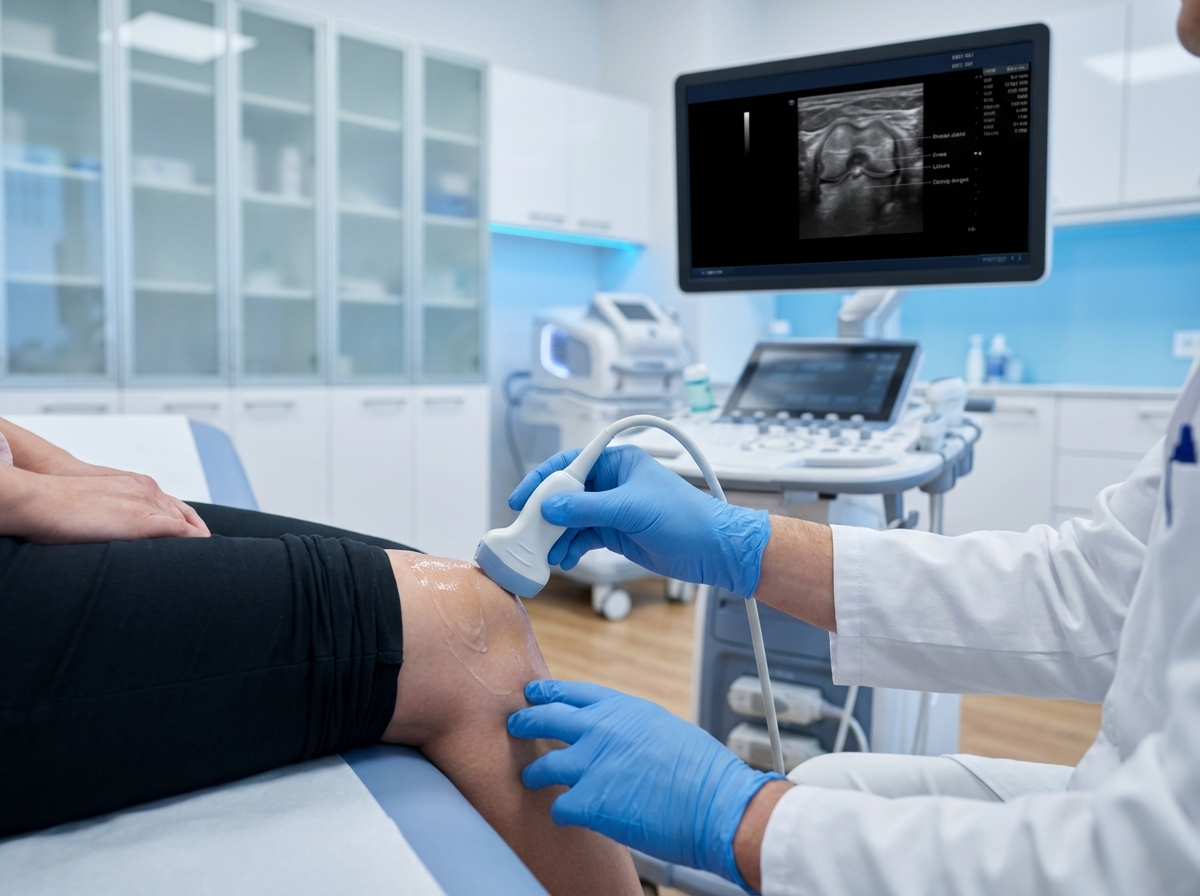
Treatment protocols typically involve 1-3 injections spaced 2-4 weeks apart, administered under ultrasound guidance for precision. Costs range from $500-1,500 per injection. PRP can be combined with hyaluronic acid for synergistic effects, offering both lubrication and regenerative benefits.
Advanced Cellular Therapies
Bone Marrow Aspirate Concentrate (BMAC): The Cellular Powerhouse
BMAC concentrates bone marrow cells containing mesenchymal stem cells and growth factors. Research indicates BMAC provides short- to mid-term symptomatic relief and functional improvement with the potential to delay total knee arthroplasty.
Ideal Patient Profile:
- Moderate-to-severe osteoarthritis (grades 3-4)
- Age 40-70
- Failed PRP or hyaluronic acid
- Surgery candidates seeking alternatives
The procedure involves harvesting bone marrow from the iliac crest, concentrating it, and injecting it the same day under imaging guidance. Effects potentially last 12-24 months. While BMAC costs more ($3,000-5,000), its durability may provide better long-term value than repeated PRP treatments.
Stem Cell Therapy: The Regenerative Frontier
Mesenchymal stem cells promote cartilage repair and modulate inflammation. Clinical studies show that stem cell therapy may provide pain relief and functional improvement for some patients with knee osteoarthritis, though results vary significantly between individuals.
Ideal Patient Profile:
- Moderate-to-severe osteoarthritis (grades 3-4)
- Age 40-65
- Failed other regenerative options
- High activity goals
Stem cell therapy represents the premium option, typically costing $5,000-10,000 or more. Patient selection is critical—younger patients with better cell quality, adequate remaining cartilage, and no severe malalignment respond best. This therapy serves as a potential alternative to joint replacement in appropriate candidates.
Emerging and Specialized Therapies
Exosome Therapy: The Cell-Free Innovation
Exosomes are extracellular vesicles from mesenchymal stem cells that deliver therapeutic signals without live cells. Research demonstrates promising results for cartilage repair, inflammation reduction, and improved joint function.
Ideal Patient Profile:
- Moderate osteoarthritis (grades 2-3)
- Patients seeking cutting-edge options
- Those with contraindications to cellular therapies
This emerging therapy offers advantages by eliminating concerns about cell viability and immune response. Availability remains limited to specialized centers, with pricing ranging from $4,000-8,000.
Peptide Therapy (BPC-157): The Controversial Contender
BPC-157, a synthetic peptide derived from gastric protein, has shown 91.6% improvement in knee pain in small retrospective studies. However, the FDA has classified it as a Category 2 bulk drug substance with insufficient safety evidence, meaning it cannot be legally compounded by pharmacies for human use.
Patients considering peptide therapy should understand its experimental nature and discuss risks and benefits thoroughly with qualified providers. Treatment protocols remain non-standardized, and peer-reviewed research is limited.
Beyond Injections: Genicular Artery Embolization
Genicular artery embolization (GAE) represents a minimally invasive procedure that blocks blood flow to inflamed knee lining, reducing pain signals. Studies report 99.7% technical success rates, with 70-85% of patients experiencing significant and lasting pain improvement—a 34-39 point reduction on the Visual Analog Scale.
Ideal Patient Profile:
- Moderate-to-severe osteoarthritis (grades 2-4)
- Chronic inflammation
- Failed multiple injection therapies
- Not ready for surgery
GAE fills an important gap between conservative management and surgical intervention, particularly for patients with inflammatory phenotypes of osteoarthritis.
The Decision Matrix in Action: Patient Scenarios
Scenario 1: A 45-year-old active female with grade 2 osteoarthritis, moderate pain, and budget concerns should start with hyaluronic acid and consider PRP if response proves inadequate.
Scenario 2: A 62-year-old male with grade 3 osteoarthritis who has been told he needs replacement but wants to delay surgery represents an ideal candidate for BMAC or stem cells as primary options.
Scenario 3: A 55-year-old athlete with grade 2-3 osteoarthritis who has failed PRP twice should consider stem cells or exosomes given high activity goals.
Scenario 4: A 70-year-old with grade 4 osteoarthritis and multiple comorbidities who is a poor surgical candidate may benefit from combination hyaluronic acid plus PRP, with GAE considered for inflammation management.
Critical Factors Influencing Treatment Selection
Age significantly impacts treatment selection. Younger patients (under 50) have better cell quality for autologous therapies, while patients over 65 may benefit more from hyaluronic acid and PRP, as cellular therapies become less predictable. Notably, post-menopausal females face 1.69 times higher risk of knee osteoarthritis and may require more aggressive early intervention.
Inflammation levels determine the optimal therapeutic approach. High-inflammation phenotypes should prioritize anti-inflammatory therapies and consider GAE, while mechanical phenotypes benefit from lubrication and structural support.
Activity goals matter substantially. High-demand athletes typically require PRP, stem cells, or exosomes for faster recovery, while recreational activity maintenance often succeeds with hyaluronic acid and PRP alone.
Managing Expectations
No regenerative therapy can reverse severe bone-on-bone arthritis or completely regrow cartilage. Success should be defined as pain reduction, improved function, and delayed surgery—not cure or complete regeneration. Individual variability means 10-30% of patients may not respond to any given therapy.
Most therapies provide 6-24 months of benefit, requiring re-treatment for sustained effects. Realistic goals should aim for 30-50% pain reduction and functional improvement. Quality matters significantly—provider experience, imaging guidance, and injection technique substantially impact outcomes.
Integrating Treatment with Lifestyle Modifications
Weight management represents the single most impactful intervention, with each pound lost reducing knee load by 3-6 times. Physical therapy strengthening quadriceps and hamstrings improves outcomes across all biologic therapies. The combination of regenerative treatments plus lifestyle modifications produces better outcomes than either approach alone.
The Future of Non-Surgical Knee Treatment
The $140 million Phase III stem cell trial announced in January 2026 will provide definitive efficacy data. Exosome therapy continues advancing with improved isolation and delivery methods. Personalized medicine approaches using genetic and biomarker profiling to predict treatment responders represent the next frontier.
Conclusion
Surgery-averse patients now have multiple evidence-based alternatives to knee replacement. The 6-Modality Decision Matrix provides a systematic approach to treatment selection based on individual factors including age, osteoarthritis severity, inflammation levels, activity goals, and budget constraints.
The escalation pathway—starting conservatively with hyaluronic acid or PRP, advancing to cellular therapies if needed, and considering emerging options appropriately—offers a rational framework for decision-making. With 224 clinical trials ongoing and major research investments, the evidence base continues strengthening.
Patients seeking comprehensive evaluation should look for providers offering multiple treatment modalities, precision-guided injections using ultrasound and fluoroscopy, and personalized protocols based on thorough assessment. With proper information and guidance, surgery-averse patients can make informed decisions aligned with their values and goals. Knee replacement need not be inevitable—regenerative medicine options deserve serious consideration before accepting surgical intervention.
Schedule Your Consultation Today!