
Exosome Therapy for Arthritis: The Inflammation-Level Protocol That Determines Your Candidacy
Exosome Therapy for Arthritis: The Inflammation-Level Protocol That Determines Your Candidacy
Patients exploring regenerative medicine for arthritis face a challenging landscape in 2026. On one hand, exosome therapy is marketed as a breakthrough treatment with remarkable potential. On the other, regulatory warnings and limited human clinical evidence create uncertainty about its true efficacy. This tension between promising preclinical research and clinical reality defines the current state of exosome therapy for arthritis.
The critical insight patients must understand is this: candidacy for exosome therapy is not universal. Whether someone may benefit from this emerging treatment depends on measurable factors including baseline inflammation levels, arthritis grade, imaging findings, and individual patient characteristics. A personalized, transparent protocol selection process—one that determines whether exosomes are appropriate alone, combined with other modalities, or not recommended at all—represents the responsible approach to this therapy.
This article provides a clinical decision-making framework rather than promotional messaging, offering patients the information needed to evaluate whether exosome therapy deserves consideration for their specific situation.
Understanding Exosome Therapy: The Science Behind the Treatment
Exosomes are nano-sized extracellular vesicles measuring 30-150 nanometers that transport bioactive molecules between cells. These tiny packages carry proteins, lipids, microRNAs, and genetic material, functioning as natural intercellular communication vehicles. When derived from mesenchymal stem cells (MSCs), exosomes deliver therapeutic signals that can influence recipient cell behavior.
The distinction between exosome therapy and stem cell therapy is significant. Exosomes represent a “cell-free” approach with theoretical advantages: no risk of tumor formation, easier storage and transport, and reduced concerns about immune rejection. Rather than introducing living cells that must survive and function in a new environment, exosome therapy delivers the beneficial signaling molecules directly.
Exosomes can be derived from multiple sources including bone marrow MSCs, adipose tissue MSCs, synovial MSCs, and umbilical cord MSCs. Research suggests different sources may have varying therapeutic profiles, though clinical evidence establishing clear superiority of one source over another remains limited.
Importantly, exosomes possess a dual nature in arthritis. While therapeutic exosomes from healthy MSCs may benefit joint health, exosomes found in osteoarthritis patients’ synovial fluid actually carry pro-inflammatory signals that can worsen disease progression. This distinction underscores why the source and quality of therapeutic exosomes matters significantly.
How Exosomes Target Arthritis at the Cellular Level
The theoretical mechanisms through which MSC-derived exosomes address arthritis pathology are well-documented in preclinical research. These mechanisms operate on multiple fronts simultaneously.
Anti-inflammatory effects represent a primary mechanism. Exosomes inhibit pro-inflammatory cytokines including IL-1β, IL-6, and TNF-α while promoting anti-inflammatory factors such as IL-10. This rebalancing of the inflammatory environment may help slow disease progression.
Cartilage protection occurs through suppression of matrix metalloproteinases (MMPs) that degrade cartilage tissue. By reducing MMP activity, exosomes may help preserve existing cartilage structure.
Regenerative effects include upregulating collagen type II and aggrecan—key structural components of healthy cartilage—while reducing chondrocyte apoptosis and cellular senescence. Preclinical studies consistently demonstrate these effects in animal models.
Additional mechanisms include modulating macrophage polarization from the pro-inflammatory M1 phenotype to the anti-inflammatory M2 phenotype, inhibiting abnormal nerve invasion into damaged tissue, and regulating subchondral bone remodeling. The specific cargo within exosomes, particularly microRNAs like miR-140-5p and miR-155-5p, appears to drive these therapeutic outcomes.
The Current State of Clinical Evidence (2026 Update)
The research landscape for exosome therapy in arthritis reveals a significant gap between preclinical promise and clinical validation. A 2025 meta-analysis examining 28 preclinical studies demonstrated consistent therapeutic advantages in animal models, with marked improvements in cartilage repair markers.
However, human evidence remains extremely limited. In early 2025, EVast Bio announced the world’s first human application of umbilical cord MSC-derived exosome therapy (EVA-100) for knee osteoarthritis, demonstrating cartilage regeneration and a strong safety profile.
The comparison to direct MSC therapy is instructive. As of September 2023, 238 registered clinical trials existed for MSC therapy in osteoarthritis, while clinical trials for MSC-exosomes in osteoarthritis remain very limited. This indicates exosome therapy remains in very early research stages, and what works in animal models does not automatically translate to human efficacy.
FDA Regulatory Status: What Patients Must Know
As of January 2026, no exosome products are FDA-approved for arthritis or any orthopedic condition. The FDA has clearly stated that exosomes require the full drug approval process and are not exempt as “minimally manipulated” tissue products.
The FDA has issued multiple warning letters and consumer alerts to clinics making unsubstantiated claims about exosome products. Patients must understand the difference between facility registration—which all legitimate medical facilities maintain—and product approval, which no exosome products currently possess.
Providers operating within FDA regulatory frameworks acknowledge this status transparently while offering treatments based on the available evidence. This matters because understanding regulatory status helps set realistic expectations and identify clinics making false approval claims.
The Inflammation-Level Protocol: Candidacy Assessment Framework
Not all arthritis patients are candidates for exosome therapy. Candidacy depends on measurable baseline factors that must be assessed through comprehensive evaluation.
Baseline Inflammation Markers That Determine Candidacy
Key inflammatory biomarkers assessed include C-reactive protein (CRP), erythrocyte sedimentation rate (ESR), and synovial fluid analysis when available. Specific cytokine profiles indicating elevated IL-1β, IL-6, and TNF-α levels suggest an inflammatory phenotype that may theoretically respond to exosome anti-inflammatory mechanisms.
Moderate inflammation levels—not acute flare-ups or end-stage disease—show the best theoretical response based on preclinical data. Baseline inflammation patterns guide whether exosomes might be recommended alone or combined with other anti-inflammatory modalities.
Arthritis Grade and Imaging Findings
The Kellgren-Lawrence classification system provides radiographic assessment of arthritis severity. Optimal candidacy generally falls within Grade 1-3 (mild to moderate) arthritis, where cartilage tissue remains present for regenerative mechanisms to act upon. Grade 4 arthritis with complete cartilage loss and bone-on-bone contact is unlikely to benefit from regenerative approaches.
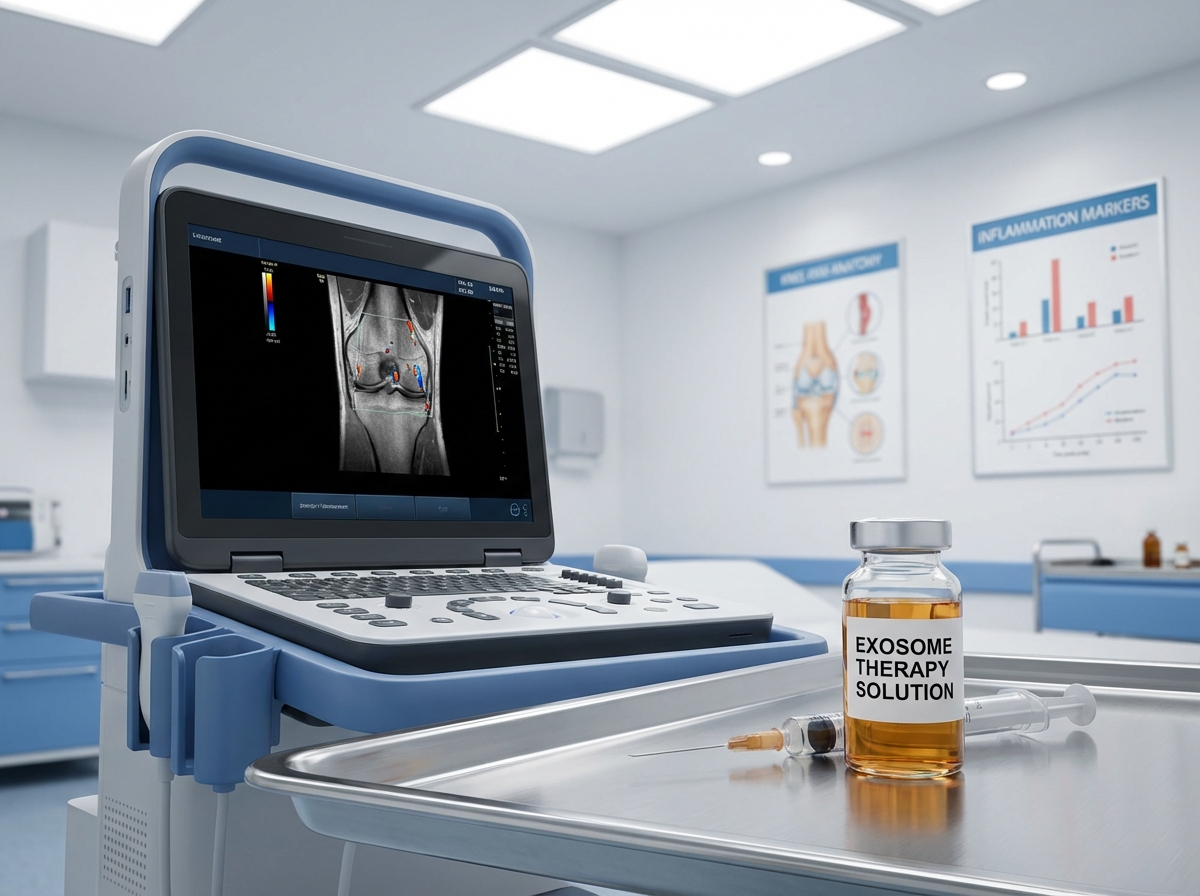
Imaging findings that influence treatment decisions include joint space narrowing, cartilage thickness on MRI, subchondral bone changes, and synovial inflammation. Precision imaging using ultrasound and X-ray guidance ensures accurate injection delivery to targeted treatment areas.
Individual Patient Factors in Protocol Selection
Age considerations matter because younger patients with better cellular regenerative capacity may respond differently than older patients with senescent cells. Current medications including NSAIDs, corticosteroids, and immunosuppressants may interact with or diminish exosome therapeutic mechanisms.
Comorbidities such as metabolic syndrome, diabetes, and autoimmune conditions affect baseline inflammation and healing capacity. Previous treatment history—response to PRP, hyaluronic acid, or other regenerative therapies—provides insight into individual healing capacity. Patient health goals and realistic functional improvement expectations must align with treatment potential.
When Exosomes Are Recommended Alone
The ideal candidate profile includes early-to-moderate arthritis (Grade 1-2), moderate baseline inflammation, and good cartilage preservation on imaging. In these scenarios, exosome monotherapy may be theoretically appropriate based on anti-inflammatory and chondroprotective mechanisms.
Realistic expectations focus on symptom management and potential disease modification rather than complete reversal. Even in ideal candidates, outcomes remain uncertain given limited human clinical evidence.
Combination Protocols: Exosomes with Other Modalities
Combination approaches target different aspects of arthritis pathology through synergistic mechanisms. Exosome plus PRP combinations provide growth factors and scaffolding while exosomes deliver targeted anti-inflammatory signals. Exosome plus BMAC protocols combine exosome signaling with direct stem cell presence for patients with moderate-to-advanced disease.
Exosome plus hyaluronic acid combinations address both lubrication and joint space restoration alongside regenerative signaling. Patient assessment determines combination selection based on inflammation levels, cartilage status, and treatment goals.
When Exosome Therapy Is Not Appropriate
Clear contraindications include severe Grade 4 arthritis with complete cartilage loss, bone-on-bone contact, and significant joint deformity. End-stage disease lacks the cartilage substrate necessary for regenerative mechanisms to function.
Acute inflammatory flare-ups, active infection, acute injury, or severe synovitis require stabilization before considering regenerative therapy. Patient factors that preclude candidacy include active cancer, certain autoimmune conditions, and unrealistic expectations despite counseling.
When exosomes are not indicated, surgical intervention such as joint replacement may be more appropriate. Responsible providers decline to treat when exosomes are not indicated rather than offering treatment to all patients.
Challenges and Limitations
Major scientific challenges include lack of standardization in isolation and production methods, variability in exosomal content between batches, low yield, inadequate targeting ability, and short circulating half-life requiring repeated injections.
Clinical trial gaps remain significant: large-scale Phase II/III trials are needed to establish efficacy, optimal dosing, treatment frequency, and duration. Quality control concerns include ensuring sterility, characterizing cargo content, and maintaining consistency across production lots. Cost and scalability barriers limit accessibility, requiring economical manufacturing while maintaining quality.
Questions to Ask Providers About Exosome Therapy
Patients considering exosome therapy should ask essential questions:
- What is the FDA approval status of the products used?
- What is the exosome source, and what quality control measures are in place?
- What specific factors make a patient a candidate or not a candidate?
- Why are exosomes alone being recommended versus combination therapy?
- What realistic improvements can be expected, and how will response be measured?
- What alternative treatments should be considered?
- When would surgery be more appropriate than regenerative therapy?
These questions help identify providers offering evidence-based, personalized approaches versus one-size-fits-all marketing.
Conclusion
Exosome therapy for arthritis shows promising preclinical mechanisms but remains in early clinical research stages as of 2026. Candidacy is not universal—baseline inflammation levels, arthritis grade, imaging findings, and individual patient factors determine appropriateness.
Responsible providers maintain transparency about regulatory status, honesty about evidence limitations, and commitment to personalized protocol selection based on measurable factors. The tension between therapeutic potential and current evidence gaps requires neither dismissing the science nor overpromising outcomes.
Patients deserve honest assessment of whether they are candidates rather than universal treatment offers. As clinical trials progress and biomarkers are validated, patient selection will become more precise and outcomes more predictable.
Take the Next Step: Schedule a Candidacy Assessment
Unicorn Bioscience offers comprehensive candidacy evaluations at eight locations across Texas, Florida, and New York, with virtual consultation options available. The evaluation process includes inflammation biomarker assessment, imaging analysis, and personalized protocol discussion.
The commitment to honest candidacy determination means recommending against exosomes when not appropriate and presenting alternative approaches when indicated. Same-day treatment is available for qualified candidates who meet candidacy criteria.
Contact Unicorn Bioscience at (737) 347-0446 or visit unicornbioscience.com to schedule a consultation. Find out if inflammation levels, arthritis grade, and individual factors indicate candidacy for exosome therapy—or which alternative approach may be right for the specific situation.
Schedule Your Consultation Today!