
Stem Cell Therapy Peripheral Neuropathy: The Musculoskeletal Complications No One Addresses
Stem Cell Therapy Peripheral Neuropathy: The Musculoskeletal Complications No One Addresses
Peripheral neuropathy affects millions of people worldwide. For these individuals, the search for effective treatment often leads down paths filled with both genuine hope and dangerous misinformation. The promise of stem cell therapy has captured the attention of patients desperate for relief, but the clinical reality in 2026 demands a more nuanced conversation.
The elephant in the room must be addressed directly: stem cell therapy for peripheral neuropathy remains experimental and is not FDA-approved. This distinction matters enormously, particularly in light of the January 2025 Federal Trade Commission action that banned the Stem Cell Institute of America co-founders from marketing stem cell treatments, ordering more than $5.1 million in refunds for false advertising related to neuropathy and other conditions.
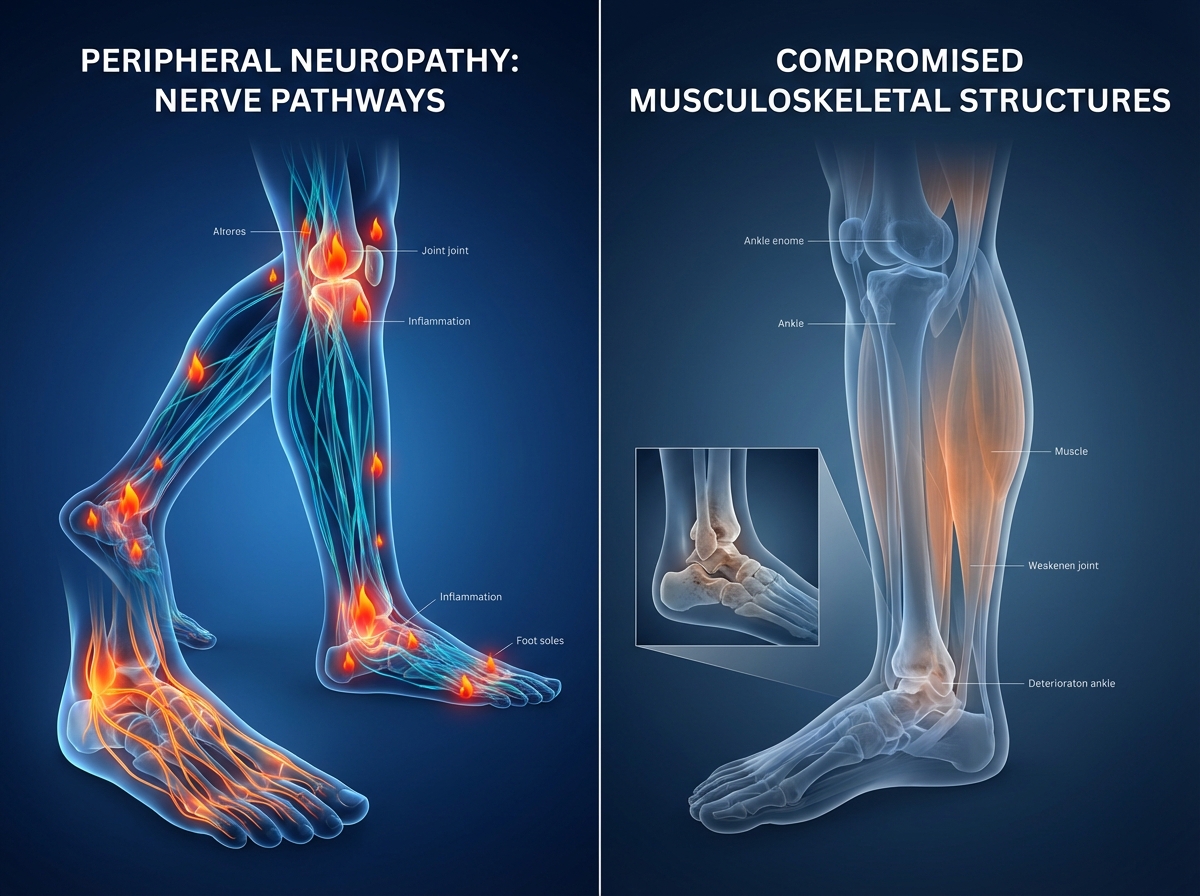
Yet while patients search for nerve regeneration miracles, they often overlook a critical reality: the tangible musculoskeletal complications of peripheral neuropathy have evidence-based treatments available right now. This article provides an honest examination of what remains experimental versus what offers clinically proven benefits for the secondary complications neuropathy patients experience daily.
The Truth About Stem Cell Therapy for Peripheral Neuropathy in 2026
The FDA has approved stem cell therapy only for certain hematological disorders—peripheral neuropathy is not among them. Understanding the current state of research helps patients make informed decisions about their care.
A 2024 systematic review published in Stem Cell Research & Therapy examined the available evidence and found only seven controlled human trials for diabetic peripheral neuropathy out of 5,431 initial entries. While these studies showed improvements in nerve conduction velocity, they lacked long-term safety data and standardization across treatment protocols.
More concerning, a 2025 study documenting stem cell therapy outcomes for peripheral nerve injury reported that five patients showed no objective functional improvement at long-term follow-up. The researchers explicitly stated that stem cell therapy for peripheral nerve injury remains in the experimental stage.
The fraud surrounding “umbilical cord stem cell” products deserves particular attention. Multiple university laboratories have confirmed that these heavily marketed products contain zero viable stem cells. The claim that these products contain “young, potent stem cells” is demonstrably false.
The proliferation of unproven clinics has been staggering. From 351 businesses operating 570 clinics in 2016, the industry exploded to 1,480 businesses at 2,754 clinics by 2021—many charging thousands of dollars per injection for treatments lacking scientific validation.
The Clinical Reality No One Is Addressing: Musculoskeletal Complications of Peripheral Neuropathy
While the medical community debates nerve regeneration possibilities, a significant gap exists in addressing the daily functional impairments neuropathy patients experience. Diabetic peripheral neuropathy affects approximately 50% of diabetes patients. Mayo Clinic researchers note that 30-40% of all neuropathy cases have no known cause, making prevention of secondary complications even more critical.
Gait and Balance Deficits
The musculoskeletal consequences of peripheral neuropathy are well-documented in clinical research. A meta-analysis of 21 studies involving 499 diabetic neuropathy patients revealed specific gait alterations:
- Shorter stride length and slower gait speed
- Longer stride time and extended stance time
- Higher maximum knee extension moment requirements
- Smaller toe-off angles affecting push-off mechanics
These findings underscore a fundamental truth: walking relies heavily on cooperation between the nervous system and musculoskeletal system. When nerve function deteriorates, the entire biomechanical chain suffers.
Research published in Brain (Oxford Academic) found that 40.4% of Parkinson’s disease patients with peripheral neuropathy demonstrated these same altered gait patterns, highlighting how neuropathy compounds existing neurological challenges.
Fall Risk and Injury Complications
The consequences of impaired balance extend far beyond inconvenience. Peripheral neuropathy creates a cascade of risks:
- Loss of protective sensation preventing injury awareness
- Muscle weakness and tightness of flexor muscles contributing to instability
- Increased risk of diabetic foot ulcers
- Significant ulcer recurrence rates even after initial healing
Falls lead to fractures, pneumonia from immobility, and loss of independence—outcomes that significantly impact quality of life regardless of underlying nerve function.
Evidence-Based Treatments for Musculoskeletal Complications
Rather than waiting for experimental treatments to mature, patients can address treatable complications with therapies available now. These approaches target the functional deficits that affect daily life while research on nerve regeneration continues.
Peptide Therapy for Nerve Support and Recovery
Certain peptide therapies have shown promise in preclinical research, though human clinical evidence remains limited:
Cortistatin has demonstrated analgesic effects in preclinical models of nerve injury and diabetic peripheral neuropathy, alleviating both mechanical and thermal allodynia. Researchers have identified cortistatin-based therapies as attractive alternatives for treating chronic neuropathic pain.
Self-assembled peptide (SAP) hydrogels represent an emerging approach, providing three-dimensional spatial structures for sustained release of therapeutic compounds with good biological compatibility.
Unicorn Biosciences incorporates peptide therapy protocols specifically designed to support recovery, wound healing, and inflammation management—addressing mechanisms beyond nerve regeneration alone.
Platelet-Rich Plasma (PRP) for Nerve and Tissue Healing
Unlike umbilical cord products that contain no viable stem cells, PRP represents an autologous therapy with published data supporting its potential to help heal damaged nerves. The treatment concentrates the patient’s own platelets and growth factors into an injectable that supports tissue repair.
Applications for musculoskeletal complications include:
- Supporting tissue integrity in affected areas
- Reducing inflammation that contributes to pain
- Promoting healing in regions experiencing increased stress from altered biomechanics
Precision-guided injections using ultrasound or X-ray technology enhance accuracy, ensuring therapeutic compounds reach intended targets. This approach offers an established safety profile since patients receive their own biological material.
Comprehensive Musculoskeletal Support
A complete treatment framework addresses multiple aspects of neuropathy-related dysfunction:
- Physical therapy and balance training protocols specifically designed for neuropathy patients
- Gait retraining to address altered walking patterns and reduce fall risk
- Strengthening programs targeting muscle weakness and flexor muscle tightness
- Hyaluronic acid injections for joint arthritis management in areas experiencing increased stress
- BMAC (Bone Marrow Aspiration Concentrate) as another autologous option available in the United States
Treating underlying conditions remains essential: diabetes management, addressing vitamin deficiencies, and eliminating toxin exposure all contribute to preventing further nerve damage.
The Unicorn Biosciences Approach: Honest Assessment, Targeted Treatment
The contrast between evidence-based care and approaches that overpromise nerve regeneration could not be starker. Unicorn Biosciences emphasizes comprehensive evaluation that considers inflammation levels, age, injury type and location, current medications, and personal health goals.
Personalized treatment plans address actual functional deficits rather than applying one-size-fits-all protocols. With U.S.-based treatment delivered by nationally licensed providers adhering to FDA regulatory standards, patients receive care that prioritizes safety alongside efficacy.
Multiple therapy options—peptides, PRP, BMAC, and hyaluronic acid—allow treatment customization based on individual presentation. Same-day injection appointments with precision guidance provide convenience without sacrificing accuracy. The clinical team brings training from Johns Hopkins and Hospital for Special Surgery, combining orthopedic expertise with cellular science knowledge.
What to Avoid: Red Flags in Neuropathy Treatment Marketing
Patients should exercise extreme caution when encountering:
- Claims of “miracle cures” or “reversing neuropathy” without scientific evidence
- Marketing stem cell therapy as FDA-approved for neuropathy
- Umbilical cord products claiming to contain young, potent stem cells
- Promises of “permanent relief” without long-term data
- Clinics operated by practitioners without specialized training
- Absence of risk discussions or alternative approaches
- Prices reaching thousands of dollars per injection for unproven treatments
Social media compounds the problem—research indicates a significant percentage of posts about stem cell therapy are overwhelmingly positive with rarely critical discussions about health risks.
Moving Forward: A Realistic Treatment Framework
Nerve regeneration research continues and may eventually offer breakthrough solutions. However, waiting for experimental treatments means living with untreated musculoskeletal complications today.
The evidence-based framework involves:
- Treating underlying causes when identifiable
- Addressing secondary complications with proven therapies
- Maintaining function and quality of life through targeted interventions
- Setting realistic expectations for improvement in pain, mobility, balance, and fall risk
Ongoing monitoring and treatment adjustment based on response ensures care evolves with patient needs. Integration with conventional medical management of underlying conditions creates comprehensive support.
Conclusion
While stem cell therapy for peripheral neuropathy remains experimental, the musculoskeletal complications are real and treatable now. The gap in current treatment approaches—focusing on theoretical nerve regeneration while ignoring daily functional impairments—leaves patients suffering unnecessarily.
Future research may bring nerve regeneration solutions, but evidence-based treatments available today can meaningfully improve quality of life. Patients deserve providers who maintain scientific integrity, offer honest assessments, and deliver personalized, comprehensive approaches targeting actual functional deficits.
Unicorn Biosciences embodies the principle of cellular science meeting orthopedic innovation—not through unproven promises, but through therapies with established evidence for the complications neuropathy patients experience every day.
Take the Next Step
Individuals experiencing peripheral neuropathy complications deserve comprehensive evaluation and honest answers. Unicorn Biosciences offers one-on-one consultations including imaging review, medical history assessment, and discussion of realistic treatment options.
Virtual consultations are available alongside in-person appointments at locations across Texas, Florida, and New York. Each consultation focuses on developing personalized treatment plans based on individual presentation, goals, and functional deficits.
Contact Unicorn Biosciences at (737) 347-0446 to schedule a consultation. No false promises—just honest assessment and evidence-based treatment for tangible complications that affect daily life.
Schedule Your Consultation Today!