
Stem Cell Therapy Hair Treatment: What Orthopedic Science Reveals About Regenerative Hair Restoration
Stem Cell Therapy Hair Treatment: What Orthopedic Science Reveals About Regenerative Hair Restoration
Hair loss affects approximately 50 million men and 30 million women in the United States, with androgenetic alopecia impacting up to 80% of men and 50% of women by age 70. As the search for effective treatments continues, stem cell therapy has emerged as one of the most promising frontiers in regenerative hair restoration.
However, a significant gap exists between exciting research headlines and clinical reality. As of 2026, stem cell therapy for hair loss remains experimental and is not FDA-approved. This distinction matters profoundly for patients considering their options.
Examining hair restoration through the lens of established orthopedic regenerative medicine—a field where cellular therapies have a more established track record—can help bridge this knowledge gap. Organizations like Unicorn Biosciences, which specialize in orthopedic applications of stem cells, exosomes, and PRP therapy, provide a valuable framework for understanding what legitimate regenerative therapies should look like. Their expertise in FDA-compliant orthopedic cellular therapies offers important benchmarks for evaluating emerging treatments in other fields.
Understanding Regenerative Medicine: Lessons from Orthopedic Applications
Regenerative medicine represents a paradigm shift in healthcare, focusing on repairing and regenerating damaged tissues rather than simply managing symptoms. In orthopedic applications, this approach has demonstrated meaningful clinical outcomes for conditions ranging from tendon injuries to cartilage degeneration.
The scientific principles underlying regenerative medicine include tissue repair, inflammation reduction, growth factor delivery, and cellular regeneration. These mechanisms work together to harness the body’s natural healing capabilities.
Unicorn Biosciences exemplifies the standards of legitimate regenerative medicine through their orthopedic practice. Their approach incorporates precision-guided injections using ultrasound or X-ray technology, ensuring accurate delivery of cellular therapies to target tissues. This level of precision and adherence to established protocols represents the gold standard that patients should expect from any regenerative medicine provider.
The foundation established by orthopedic applications provides a crucial benchmark for evaluating emerging therapies in other areas, including hair restoration.
The Science Behind Stem Cell Regeneration: Lessons from Orthopedic Medicine
Stem cells function as the body’s natural repair system, possessing the unique ability to differentiate into various tissue types. In proven orthopedic applications, stem cell therapies have demonstrated efficacy in tissue repair, cartilage regeneration, and tendon healing.
The biological mechanisms involve stem cells releasing growth factors, cytokines, and signaling molecules that orchestrate tissue regeneration. When properly delivered to damaged tissue, these cells can reduce inflammation, promote cellular proliferation, and facilitate the formation of new, healthy tissue.
Orthopedic regenerative medicine has established rigorous clinical evidence standards over decades of research and application. FDA-approved applications include bone marrow transplantation and treatments for certain blood disorders. Additionally, autologous tissue therapies like Bone Marrow Aspiration Concentrate (BMAC)—which Unicorn Biosciences offers—represent well-established regenerative approaches.
The regulatory framework governing legitimate regenerative medicine therapies requires extensive clinical trial data, manufacturing standards, and safety protocols. The FDA regulates cell-based products under its Cellular & Gene Therapy Products framework to ensure patient safety and consistent manufacturing standards.
Understanding Hair Follicle Biology: The Stem Cell Connection
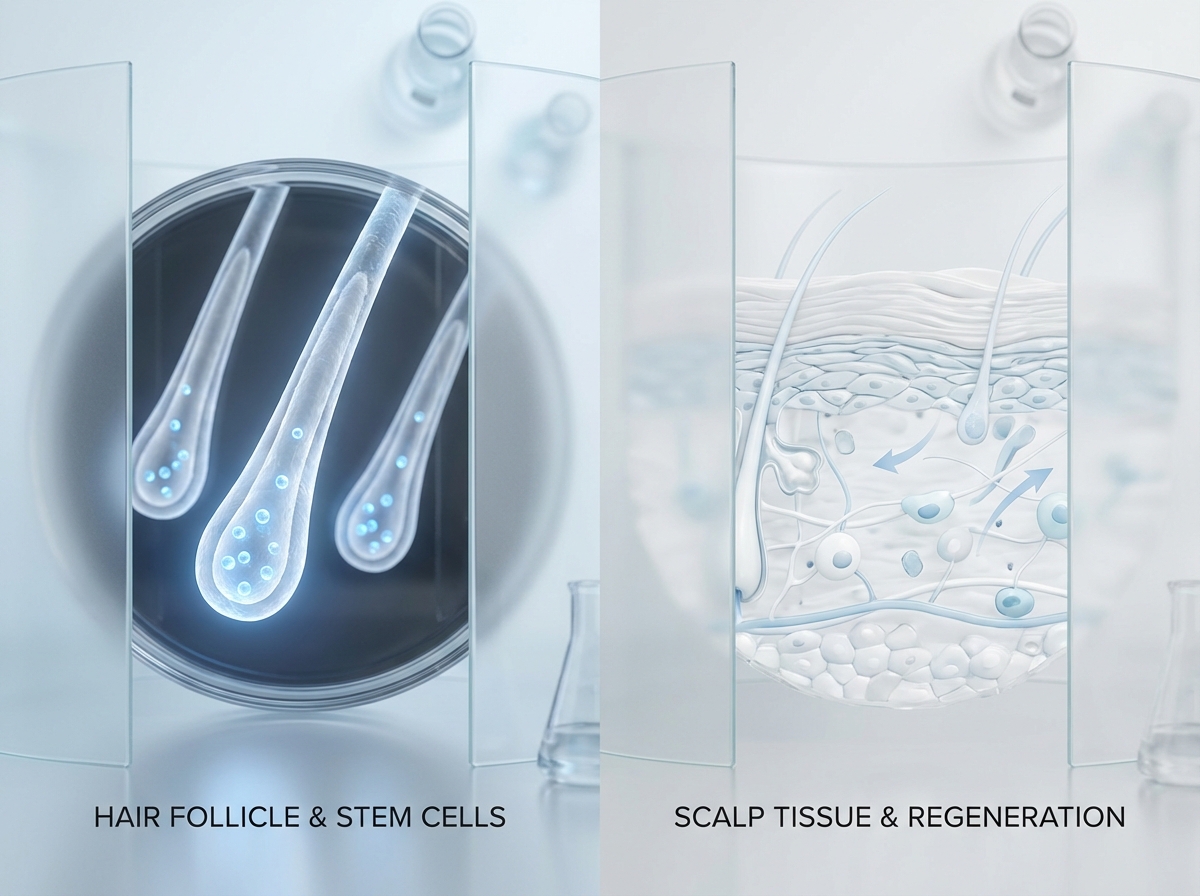
Hair follicles contain their own stem cell populations that naturally regenerate hair through growth cycles. Recent research has revealed fascinating insights into these cellular mechanisms.
Researchers at the University of Virginia have identified previously overlooked stem cell populations in the upper and middle sections of hair follicles. Remarkably, these novel hair stem cells remain present even in bald scalp tissue, suggesting that hair follicles may become dormant rather than permanently inactive.
This discovery has significant implications for treatment development. If dormant follicle stem cells can be reactivated, patients might regrow hair without requiring surgical transplantation of follicles from other areas.
The same regenerative medicine principles used in orthopedic applications—tissue repair, inflammation reduction, and cellular signaling—apply to hair follicle biology. This biological parallel helps explain why researchers are exploring stem cell therapies for hair restoration.
Understanding Stem Cell Therapy Approaches for Hair Restoration
Three main approaches characterize stem cell therapy for hair restoration:
Stem Cell Transplantation: Direct injection of stem cells into the scalp to stimulate follicle regeneration.
Stem Cell-Derived Conditioned Medium (CM): Using the growth factors and proteins secreted by stem cells rather than the cells themselves.
Stem Cell-Derived Exosomes: Nano-sized vesicles that carry proteins, RNA, and growth factors to injured tissue, calming inflammation and accelerating regeneration.
Stem cells for these treatments can be sourced from adipose tissue, bone marrow, hair follicles from unaffected areas, and umbilical cord blood. Autologous approaches (using the patient’s own cells) are generally considered safer than allogeneic (donor) approaches.
The concept underlying these therapies differs fundamentally from traditional hair transplants. Rather than relocating existing hair from one area to another, stem cell therapy aims to reactivate dormant hair follicle stem cells—addressing the condition at its biological source.
Clinical Evidence: What the Research Actually Shows
Over 4,700 NIH-sponsored clinical trials are currently exploring stem cell therapy applications, including research focused on hair loss. The results to date show promise but require careful interpretation.
Key findings include:
- Italian research documented a 29% increase in hair density 23 weeks after treatment
- Multiple studies report 60-80% of patients experiencing improved hair density
- A 2025 preclinical study demonstrated 100% hair regrowth in male mice and up to 90% in female mice using adipose-derived stem cells with ATP supplementation
- Randomized controlled trials of adipose-derived stem cell conditioned medium (ADSC-CM) showed significant increases in hair count (28.1% versus 7.1% in control groups)
Timeline expectations remain important for patient understanding. Results typically take 6-12 months to become visible, and maintenance sessions may be required annually.
Patient selection criteria significantly impact outcomes. Stem cell therapy works best for early to moderate hair loss with active follicles. The treatment is not effective for complete baldness or advanced scarring alopecia.
Regarding safety, no major side effects have been reported in clinical studies. Common minor effects include temporary pain, swelling, and redness at injection sites, with potential scarring at tissue extraction sites.
What’s missing from the evidence: Long-term efficacy data, standardized protocols, and large-scale reproducible studies remain limited. The American Hair Loss Association issued an advisory in 2025 stating that stem cell and exosome therapies for hair loss remain unproven outside controlled research settings.
The Regulatory Reality: FDA Status and Clinical Standards
Understanding the regulatory landscape is essential for anyone considering stem cell therapy for hair restoration.
Current FDA Status: Stem cell therapy for hair loss is NOT FDA-approved as of 2026 and remains investigational and experimental. The FDA has issued warnings about unproven stem cell therapies marketed directly to consumers.
A critical distinction exists between legitimate clinical trials (IRB-approved studies) and commercial “stem cell tourism” clinics operating outside regulatory frameworks. Patients should verify whether any treatment they consider is part of a registered clinical trial.
The contrast with orthopedic applications is instructive. Organizations like Unicorn Biosciences operate within established FDA guidelines for cellular therapies, demonstrating that legitimate regenerative medicine adheres to strict safety standards. Their commitment to FDA compliance and U.S. medical standards provides a model for how regenerative medicine should be practiced.
Insurance does not cover experimental stem cell treatments for hair loss, and patients should approach any clinic making unrealistic promises with significant caution.
Cost Considerations and Treatment Economics
The financial investment in stem cell therapy for hair restoration is substantial:
- U.S. cost range: $3,000-$25,000 per treatment
- Number of sessions: Most patients require 2-6 sessions
- International options: Costs are 50-70% lower in countries like Mexico and Turkey, though regulatory and quality considerations apply
For comparison, traditional FUE/DHI hair transplants typically cost $3,000-$15,000, while PRP therapy—which Unicorn Biosciences offers for orthopedic applications—generally costs less than stem cell treatments.
Costs vary based on cell source, processing methods, provider expertise, and geographic location. The experimental status means no insurance coverage, making these entirely out-of-pocket expenses.
The global hair restoration market was valued at $6.46 billion in 2023 and is projected to reach $18.92 billion by 2030, indicating significant growth and investment in this field.
Evaluating Treatment Quality: Standards from Orthopedic Regenerative Medicine
Quality standards from established orthopedic regenerative medicine provide valuable criteria for evaluating any cellular therapy provider:
- Precision-guided delivery: Treatments should use imaging guidance for accurate placement
- Proper cell sourcing and processing: Facilities should follow rigorous handling procedures
- Comprehensive patient evaluation: Medical history review, imaging analysis, and realistic goal-setting
- Provider qualifications: Practitioners should have documented training and expertise
- Follow-up protocols: Legitimate providers establish ongoing monitoring
Unicorn Biosciences’ approach to orthopedic cellular therapies demonstrates these standards in practice. Their nationally licensed providers, comprehensive evaluation process, and precision-guided injections represent the level of care patients should expect.
Red flags to watch for include: unrealistic promises of guaranteed results, lack of informed consent documentation, absence of follow-up protocols, and unwillingness to discuss the experimental nature of treatments.
The Future of Regenerative Hair Restoration
Several developments suggest continued advancement in this field:
Pelage Pharmaceuticals’ PP405, a topical small molecule that reactivates dormant hair follicle stem cells, completed positive Phase 2a trials in 2025 and is advancing to Phase 3 trials in 2026. This represents a significant step toward potential FDA approval.
Ongoing research continues to explore hair follicle stem cell populations and reactivation mechanisms. The path to FDA approval requires standardized protocols, reproducible outcomes, and extensive safety data—the same rigorous process that orthopedic regenerative medicine has undergone.
The alopecia market is projected to grow from $9.48 billion in 2024 to $16.02 billion by 2030, driving continued research investment.
Making Informed Decisions: Questions to Ask Providers
Patients considering any stem cell therapy should ask:
- What are the provider’s qualifications and training in regenerative medicine?
- What is the source of the stem cells, and how are they processed?
- Is this treatment part of an IRB-approved clinical trial?
- What are realistic expectations for outcomes and timeline?
- What follow-up protocols are in place?
- What are the specific risks and potential side effects?
Conclusion
Stem cell therapy for hair restoration shows scientific promise but remains experimental as of 2026. The distinction between FDA-approved orthopedic applications and investigational hair treatments is critical for patients to understand.
Shared regenerative medicine principles provide a framework for distinguishing legitimate approaches from questionable ones. Quality standards established in orthopedic cellular therapies—like those practiced by Unicorn Biosciences—offer benchmarks for evaluating any regenerative medicine provider.
Patients seeking hair restoration should prioritize participation in legitimate clinical trials over unregulated commercial treatments, maintain realistic expectations, and thoroughly evaluate provider credentials and protocols.
Take the Next Step in Understanding Regenerative Medicine
For those interested in learning more about regenerative medicine for orthopedics and FDA-compliant cellular therapy applications, Unicorn Biosciences offers consultations focused on orthopedic conditions. With locations across Texas, Florida, and New York, plus virtual consultation options, their team provides evidence-based, personalized treatment approaches for orthopedic injuries.
Their commitment to patient education and transparent communication about treatment options reflects the standards that should guide all regenerative medicine practices. Contact Unicorn Biosciences at (737) 347-0446 to schedule a consultation and learn how cellular therapies may support orthopedic healing.
Schedule Your Consultation Today!